
First Nations Protocols Consultation Series and ICIP Digital Workshops
Contact
Please direct all enquiries about the workshops and sessions to info@parallaxlegal.com.au.
Overview
Creative Australia have engaged Parallax Legal to deliver a series of workshops and consultations focused on Creative Australia’s Protocols for using First Nations Cultural and Intellectual Property in the Arts and Digital Indigenous Cultural and Intellectual Property (ICIP).
The delivery has two components:
- First Nations Protocols Consultation – consultation sessions seeking the views and experiences of First Nations peoples and others working with First Nations artists and communities to inform the new iteration of Creative Australia's First Nations Protocols to reflect best practice and address emerging issues, including the use of generative AI and further uses and risks relating to Digital Indigenous Cultural and Intellectual Property (ICIP).
- Digital ICIP Workshop – practical learning sessions designed to build First Nations artists' and arts workers' knowledge and confidence in protecting ICIP in digital environments, including social media, digital licensing and generative AI.
The two sessions will be held on the same day and at the same venue, allowing participants to attend either session or both.
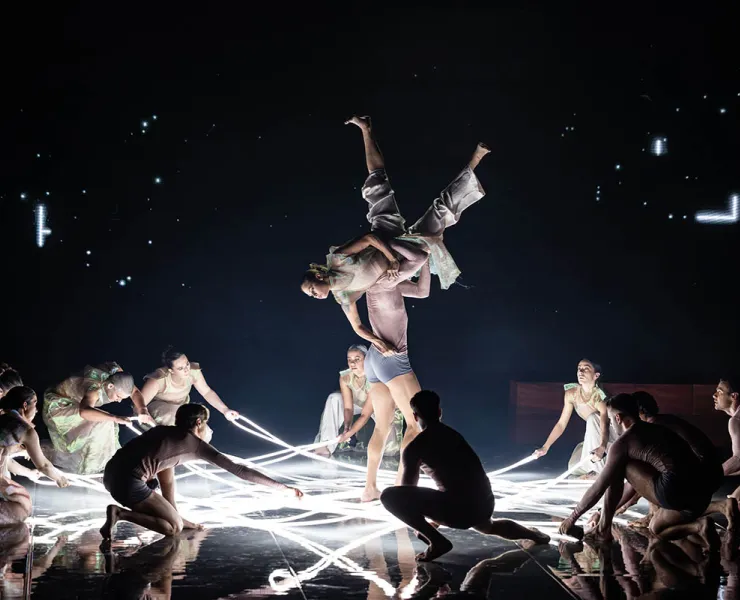
Bangarra, 'Illume'. Photo: Daniel Boud
Key dates
| Date | Location | Venue | Time | Registration link |
| Tuesday 22 September 2026 | Perth | Indigenous Desert Hub, 587 Newcastle St, West Perth WA 6005 |
Digital ICIP morning workshop: 10am to 2pm
First Nations Protocols afternoon consultation: 2:30pm to 4:15pm |
Morning workshop: REGISTER Afternoon consultation: REGISTER |
| Thursday 24 September 2026 | Broome | Broome Circle, 27 Frederick St (Cnr Weld) Broome, Western Australia 6725 |
Digital ICIP morning workshop: 10am to 2pm
First Nations Protocols afternoon consultation: 2:30pm to 4:15pm |
Morning workshop: REGISTER Afternoon consultation: REGISTER |
| Tuesday 27 October 2026 | Cairns | TBA |
Digital ICIP morning workshop: 10am to 2pm
First Nations Protocols afternoon consultation: 2:30pm to 4:15pm |
Registrations open soon |
| Tuesday 24 November 2026 | Hobart | TBA |
Digital ICIP morning workshop: 10am to 2pm
First Nations Protocols afternoon consultation: 2:30pm to 4:15pm |
Registrations open soon |
There may be further dates and locations added for in-person sessions which will be posted on this page once confirmed.
First Nations Protocols Consultation
The National Cultural Policy Revive; A Place for Every Story, A Story for Every Place identified several priority areas for First Nations investment and advocacy. One of these areas for focus at Creative Australia was to ‘Promote best practice cultural protocols, the principle of self-determination and cultural safety training across arts and cultural organisations’.
To undertake this important work it is critical that we understand the current sector expectations surroundings First Nations protocols and principles associated with best practice engagement.
The Protocols Consultation process is a listening and engagement approach to inform the new iteration of Creative Australia's Protocols for using First Nations Cultural and Intellectual Property in the Arts.
First published in 2002 (and revised in 2007 and 2019) by Dr Terri Janke and Company, Creative Australia's Protocols for using First Nations Cultural and Intellectual Property in the Arts. The Protocols have been utilised as a practical framework to guide individuals, organisations and others working with First Nations artists and communities.
Following on from the important work by Dr Terri Janke and Company, the new iteration will ensure the Protocols remain relevant and responsive to current industry standards, best practice and the expectations and rights of First Nations communities. The consultations will seek to identify and understand emerging issues and opportunities affecting First Nations cultural and intellectual property, including the increasing use of digital technologies and artificial intelligence.
To support this process, Parallax Legal will conduct in-person and online consultation sessions with participants working in the arts, cultural and creative industries. The focus will be on open conversation, active listening and gathering practical insights to inform the new iteration of Creative Australia’s First Nations Protocols.
Who should participate?
The consultation is open to:
- First Nations artists and creatives across all art forms, disciplines and media
- First Nations arts workers
- organisations and practitioners working with First Nations artists and communities
- people working in the broader creative industries who work or collaborate with First Nations peoples.
Format
Each consultation will run for approximately 90 minutes.
Stephanie Parkin (Co-Founder and Principal) and Jack Howard (Lawyer) from Parallax Legal will provide a short overview of the expectations, consultation and drafting process before facilitating an open discussion with participants.
Digital Indigenous Cultural and Intellectual Property (ICIP) Workshop
This decade has seen significant shifts in the landscape under the National Cultural Policy, Revive, with significant changes in arts, culture, commercial practices, technology and the expectations of community. New and emerging technologies present unique opportunities and challenges for First Nations artists across all art forms and practice.
In addition to the intellectual property rights and other artists’ and performers’ rights shared by all Australians, it is important for First Nations artists to consider how best to protect Indigenous Cultural and Intellectual Property (ICIP) in their work when engaging with the digital space.
The Digital ICIP Workshop is a practical, skills-focused session designed to help First Nations creatives and arts workers understand and protect their intellectual property and Indigenous Cultural and Intellectual Property in an increasingly digital environment.
The workshop responds to the rapid growth of digital technologies and emerging issues such as generative AI, digital reproduction, online sharing, licensing and the use of creative material in digital platforms.
Who should attend?
The workshop is open to:
- First Nations artists and creatives across all art forms and career stages
- First Nations arts workers across disciplines and industries
- First Nations creatives who use, share, promote or distribute their work through digital platforms.
Format
The in-person workshop will run for approximately four hours from 10.00am to 2.00pm and will be delivered by Stephanie Parkin (Co-Founder and Principal) and Jack Howard (Lawyer) from Parallax Legal, with an artist experienced in digital practice co-presenting part of the session. Each workshop is free to attend, with complimentary morning tea, lunch and afternoon tea.
Frequently asked questions
What are the Creative Australia First Nations Protocols?
First published in 2002 (and revised in 2007 and 2019) by Dr Terri Janke and Company, the Protocols for using First Nations cultural and intellectual property in the arts endorse the rights of First Nations people to their cultural heritage and support First Nations creative practice.
These Protocols encourage self-determination and help to build a strong and diverse First Nations arts sector. Both are key goals and priority areas for Creative Australia.
Artists and creative workers who work with First Nations artists or engage with Indigenous cultural heritage in projects that are funded by Creative Australia's assessment panels are required to comply with these Protocols as a condition of funding.
Over the years, the principles and protocols contained in this guide have also been applied nationally and internationally – educating readers and users on Indigenous Australian cultural heritage and encouraging meaningful collaborations with First Nations artists and creators.
Who can participate in the consultations?
All consultation sessions advertised on this page are open to the public and free to attend. Afternoon tea will be provided for all attendees ahead of each session.
Please register your interest using the links above.
We are interested in hearing from all First Nations creatives and arts workers across all art forms, disciplines and media. We are also interested in hearing from anyone working in the broader creative industries who works or collaborates with First Nations peoples.
If you have accessibility requirements, please let us know and we will do our best to meet your needs.
How can I prepare?
To contribute to these sessions, it will help if you have a moment to review the current Protocols for using First Nations cultural and intellectual property in the arts ahead of time.
Participants will be asked to share their thoughts about the Protocols, and your feedback will help guide the review and refresh work.
There are three questions you might like to consider ahead of the consultation session:
- How do you currently use the Protocols? What has worked well and where have the Protocols supported your practice, your work or your engagement with others both inside or outside the sector?
- What do you want to see in the Protocols, including any current gaps? What topics are your top priorities – either for your own information, or as a resource to share with others?
- How can we make the Protocols more accessible to you? What changes to structure, format, content or anything else would help you in your use and engagement with the Protocols going forward?
What is the First Nations Protocols consultation seeking?
The consultation will seek participants' views about:
- how the current Protocols are used in practice
- what is working well
- where the current Protocols may have limitations or gaps
- emerging issues that should be addressed
- the information, guidance and resources people need
- how the Protocols can better support self-determination and respectful engagement
- how the Protocols can respond to changes in arts, culture, technology and commercial practice
- how the Protocols can be made more accessible, practical and useful.
What is ICIP?
Indigenous Cultural and Intellectual Property or ICIP is a term that describes the embedded knowledge that Aboriginal and Torres Strait Islander peoples have that informs cultural practice, expression and identity.
ICIP is grounded in the thousands of generations of Aboriginal and Torres Strait Islander peoples observing and living with the all-encompassing environment, and the resultant knowledge that comes from that multigenerational and multidimensional lived experience.
In these workshops, you will learn more about ICIP and the rights attached to ICIP, including the differences between ICIP and intellectual property law in Australia.
What does “digital” ICIP mean?
In these workshops, the word “digital” is intended to mean any new and emerging technology that can be used to create, share or impact creative practice.
From editing, recording and production tools, through to generative AI, these sessions are about the ways in which all First Nations creatives can protect ICIP in whatever form it appears in any artwork, song, film, story or performance.
When we think about “digital” ICIP, we also include artists who work using traditional materials and techniques, but who might share images of their work on social media or elsewhere online; or artists who have had their works scanned and reproduced digitally through licensing agreements.
Whether you use digital technologies to create new work or want to protect your work to stop others from misusing your ICIP, there will be useful information in this workshop for your practice.
By attending the Digital ICIP Workshops, you will:
- have a clear understanding of your intellectual property and ICIP and rights
- be able to identify ICIP and the risks involved when using ICIP in a digital context
- learn about generative artificial intelligence (AI) and how to protect your ICIP when navigating generative AI models
- develop strategies and tips for protecting ICIP in a digital context, including on social media
- put in place proactive steps you can take in your practice to reduce risks to your copyright and ICIP when presented with new opportunities
- receive a work booklet containing information on the topics discussed and space to take notes.
Who can participate in the workshops?
These workshops are for First Nations artists across all art forms and career stages. We use the word “artist” to mean any creative discipline including the visual arts, writing, photography, film, graphic design, dance, performance and more.
You do not need to be a “digital artist” to join. If you promote your work and practice on social media, have concerns about generative AI, or want to learn more about digital licensing, there will be useful information for you in these workshops.
You also do not need to be an artist to join. Any First Nations arts workers across disciplines and industries are welcome.
If you have accessibility requirements, please let us know and we will do our best to meet your needs.
Relationship between the two sessions
Although the Digital ICIP Workshop and Protocols Consultation are being delivered together, they have different purposes.
| Digital ICIP Workshop | Protocols Consultation |
| Learning and capacity building | Listening and consultation |
| Focuses on digital ICIP | Focuses on the broader First Nations Protocols |
| Practical information and strategies | Experiences, feedback and recommendations |
| Participants build their knowledge | Participants help shape the new Protocols |
| Includes emerging digital issues such as AI | Considers how emerging issues should be reflected in the Protocols |
| Approximately 4 hours | Approximately 90 minutes |
Participants can attend either session independently or both sessions.
Will the sessions be recorded?
Creative Australia and Parallax Legal may record the audio of each session to refer to as required for the review and refresh of the Protocols for using First Nations Cultural and Intellectual Property in the Arts.
The recordings are for internal use only and will not be published online or made available to the public.
Creative Australia and Parallax Legal may take photographs at this event which will be used to promote the review and refresh work. If you do not want your photograph taken at this event, please let us know on the day.
Will there be additional locations and sessions added?
There may be further dates and locations added for in-person sessions, which will be posted on this page once confirmed.
There will also be a series of online consultation sessions for those who wish to contribute but are unable to attend an in-person session. These sessions will also be posted on this page once confirmed.

We acknowledge the many Traditional Custodians of Country throughout Australia and honour their Elders past and present.
We respect their deep enduring connection to their lands, waterways, and surrounding clan groups since time immemorial. We cherish the richness of First Nations peoples’ artistic and cultural expressions. We are privileged to gather on this Country and to share knowledge, culture and art, now and with future generations.
