

Helsinki International Artist Programme (HIAP)
Key dates
Applications close: Tuesday 15 September 2026 at 3:00pm (AEST)
Notification date: early December 2026
Please note: To apply you must be registered in our application management system a minimum of two business days prior to the closing date
Details
Eligible artforms:
Community arts and cultural development, Dance, Emerging and experimental arts, First Nations arts and culture, Literature, Music, Theatre, Visual arts
Location: Suomenlinna Island in Helsinki, Finland
Amount: $15,000
Further information
If you would like advice on your application, please contact the International team:
international@creative.gov.au
Residency dates
12 April – 4 July 2027
16 August – 14 November 2027
Please note: To apply you must be registered in our application management system a minimum of two business days prior to the closing date.
About the opportunity
Founded in 1998, HIAP – Helsinki International Artist Programme – is the largest international residency centre in the Nordic and Baltic region. Every year up to 40 artists and arts professionals residing in Finland and abroad are offered a working period at HIAP.
With $15,000 in funding, this three-month residency program offers time and space for open-ended research and experimentation, without the requirement to produce finalised work. The HIAP residency venues are located on Suomenlinna island, a UNESCO World Heritage Site located a 15-minute ferry ride away from the centre of Helsinki, and in the Cable Factory cultural complex in Helsinki.
The HIAP residency program focuses on visual arts, however, it is open to artists and curators from various disciplines. Collaborating with local and international partner organisations, residencies extend to such creative fields as dance, theatre, literature, and music. The activities are organised predominantly through thematic residency programs that highlight a geographical area or concentrate on a specific contemporary topic or an aspect of artistic practice.
The HIAP residency program offers time and support for developing new work in dialogue with the local art scene. The goal is to offer space for experimental, cross-disciplinary art practices and to actively contribute to topical debates within and around the context of art.
The HIAP team help the residents with their research as well as practical everyday matters. Residents have access to services such as weekly residency community meetings, facilities and equipment, and the option to take part in the HIAP Open Studios event. This normally takes place towards the end of each residency season and is an opportunity to present work-in-progress to arts professionals and the general public.
More information can be found on the Helsinki International Artist Programme website.
You can learn more about the studio, accommodation, local area, and travel arrangements by downloading the Information Pack PDF.
The HIAP residency is a highly competitive opportunity. Past successful applicants typically demonstrated a clear rationale regarding the relevance of their proposal to the local arts scene and community. We encourage applicants to read through the assessment panel’s general feedback from the previous round and to contact us for advice.
Eligibility
Who can apply
- Only individuals may apply to this category.
- You must be a practicing artist or arts worker.
- You must be an Australian citizen or an Australian Permanent Resident.
- You can apply with a proposal in Community arts and cultural development, Dance, Emerging and experimental arts, First Nations arts and culture, Literature, Music, Theatre, Visual arts (excluding activities associated with feature film, television, or documentary).
Who cannot apply
you cannot apply if:
- you are a group or an organisation
- you have submitted another application to the same round of HIAP residency
- you have an overdue grant report
- you owe money to Creative Australia.
Assessment
Industry advisors and Creative Australia staff will consider applications according to the assessment criteria. All applicants will be notified of the outcome of their application by early December 2026.
Applicants must address the following assessment criteria:
- Quality
Industry advisors will assess the quality of the artistic and/or cultural development activities proposed in your application.
They may consider:
- your artistic practice and quality of your previous artistic works
- the vision, ideas and artistic rationale for your proposed residency
- your level of motivation and approach to personal learning, collaboration and development.
- Viability
Industry advisors will assess the viability of the proposed activities.
They may consider:
- feasibility and relevance of proposed activity in the context of the residency context
- realistic and achievable planning within the residency period.
- Impact
Industry advisors will assess the expected impact of the proposed activities on your career.
They may consider:
- how the residency will contribute to the development of your artistic practice, including relevance and timeliness
- how the residency will strengthen your professional networks, international engagement and future opportunities for collaboration.
Support material
You should submit support material with your application. Assessors may review this support material to help them gain a better sense of your project.
What you should provide
We do not accept application-related support material submitted via post. Application-related material received by post will not be assessed and will be returned to the sender. If you think you will have difficulty submitting your support material online, or need advice on what type of material to submit, please contact us.
There are three types of support material you may submit:
1. Artistic support material
This should include relevant, recent examples of your artistic or cultural work.
Types of support material we accept
Our preferred method of receiving support material is via URLs (weblinks).
You can provide up to three URLs (weblinks) that link to content that is relevant to your proposal. This may include video, audio, images, or written material.
These URLs can include a total of:
- 10 minutes of video and/or audio recording
- 10 images
- 10 pages of written material (for example, excerpts of literary writing).
Please note: Our assessors will not access any URLs that require them to log in or sign up to a platform. Please do not provide links to Spotify or other applications that require users to log in or pay for access.
If you are linking to media files that are private or password protected like Vimeo, please provide the password in the password field on the application form.
Other accepted file formats
If you cannot supply support material via URLs, you may upload support material to your application in the following formats:
- video (MP4, QuickTime, and Windows Media)
- audio (MP3 and Windows Media)
- images (JPEG and PowerPoint)
- written material (Word and PDF).
2. Biographies and CVs
You can include a brief bio or curriculum vitae (CV) for key artists, personnel or other collaborators involved in your project.
Brief bios or CV information should be presented as a single document no longer than two A4 pages in total.
3. Letters of support
Individuals, groups, or organisations can write letters in support of your project. A support letter should explain how the project or activity will benefit you, other artists or arts professionals, participants, or the broader community. It can also detail the support or involvement of key project partners, or evidence of consultation.
If relevant to your activity, letters of support must provide evidence of appropriate permissions and support from First Nations organisations, communities, and Elders. Please refer to the First Nations Protocols for more information.
You can include up to five letters of support, with each letter not exceeding one A4 page.
Location, accommodation and workspace
The selected residents stay in a HIAP Suomenlinna atelier apartment. The residency spaces are in the Palmstierna studio complex, a renovated two-storey red-brick barrack from the 18th century, currently housing nine residential units (five atelier apartments and four regular apartments) and one workspace for artists.
The HIAP Suomenlinna atelier apartments are approx. 80 sqm each, furnished, and divided into a working space downstairs and a separate living space with bathroom and fully equipped kitchenette upstairs. The atelier apartments feature two single beds and a sofa-bed and can accommodate a family up to three persons. Bedding, linen, and towels are provided. The atelier apartments have a wireless internet connection. You can see some of the residency spaces here.
Access and inclusion
Suomenlinna Island has some access restrictions. Where this is not an appropriate location, it may also be possible to be located at HIAP's Cable Factory site. In order to facilitate this, we would recommend highlighting your potential accessibility requirement within the application.
It is possible to access the ground floor of the HIAP atelier apartments, office, Gallery Augusta & Project Space by wheelchair, but HIAP recommend wheelchair users be accompanied by a person assisting because the entrance doors are not step-free. The living area of the two-story atelier apartments is accessible only via staircase (approx. 19 steps), and not accessible by wheelchair. The toilets are not spacious enough to meet accessibility standards.
If you would like any further information about accessibility, or would like to discuss your access requirements in advance of making an application, please contact the International team at international@creative.gov.au or the residency partner at office@hiap.fi.
To apply for this grant, you will need to complete an online application form. If you would like to submit sections of your application in accessible formats such as audio or video, please contact us at least two weeks before the closing date.
Families and guests
Family members and guests are welcome in all HIAP’s locations. The atelier apartment can accommodate a family of two adults with up to two small children. The set up of the apartment cannot accommodate artists living together outside of a family situation. Please note that pets are not allowed in the rooms.
Protocols
Your application must comply with the following Protocols. We may contact you to request further information during the assessment process, or if successful, as a condition of your funding.
Protocols for using First Nations Cultural and Intellectual Property in the Arts
All applications involving First Nations artists, communities or subject matter must adhere to these Protocols, provide evidence of this in their application and support material. More information on the First Nations Protocols is available here.
Commonwealth Child Safe Framework
All successful applicants are required to comply with all Australian law relating to employing or engaging people who work or volunteer with children, including working with children checks and mandatory reporting. Successful organisations who provide services directly to children, or whose funded activities involve contact with children, will additionally be required to implement the National Principles for Child Safe Organisations.
Latest cohort of residents
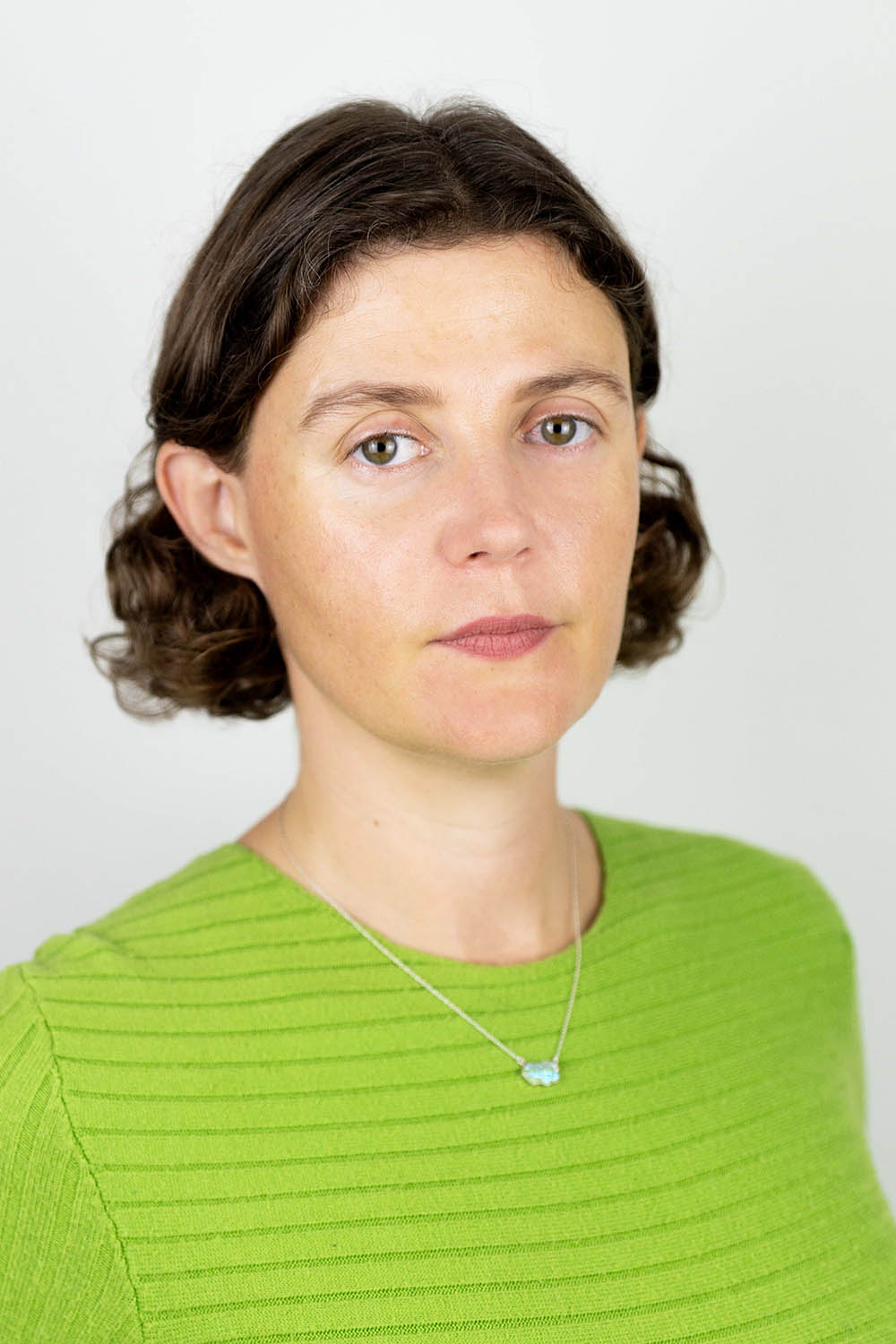
Photo: Andrew Fraser
Harriet Gillies makes post-internet performance works exploring sex, death and capitalism. Working across theatre, live art and participatory formats, she builds nonlinear, parafictional environments that invite audiences into strange, destabilising encounters. Her practice centres interdisciplinary collaboration and rigorous experimentation, moving away from logocentric storytelling toward embodied, intuitive and emotional ways of knowing. Through ritual, language and choreographic structure, she creates entertaining, unsettling and sometimes transcendent experiences that challenge individualism and offer temporary alternatives to capitalist, patriarchal time.
Residency project:
At HIAP, I will explore collapse not as singular disaster but as something durational, ambient and lived within. I am excited to use the residency to move into a different somatic relationship to time, asking how ecological instability stretches the present through anticipation and loss. Through moving image, writing and embodied research, I will experiment with careful observation, ocean-based attention, and analogue and lo-fi digital processes that mirror erosion and decay. I am drawn to ritual and grief practices as ways of marking change while it unfolds, and to how art might help us feel time differently in ongoing transformation.

Photo: Melanie Kate Creative
Laura Purcell is a multidisciplinary artist from Lutruwita/Tasmania, Australia. She investigates tensions between personal, environmental and historical manifestations of invisible labour, care and equity. Her practice of soft sculpture, textiles, costume, devising, performance and documentation connects with a 25+ year background in theatre, hybrid and improvisational performance, visual art, puppetry, design and dance. Her creative activations reveal submerged narratives, located in real and imagined places and time. Laura holds a Bachelor of Fine Art (Honours), a Bachelor of Performing Arts (Theatre). Residencies include Poatina Arts (Arts Tasmania), Education Residency Launceston College (Arts Tasmania) and Rosamond McCulloch Studio, Cité internationale des arts, Paris (University of Tasmania, Arts Tasmania) and Salamanca Arts Centre.
Residency project:
Creative approaches to hydrofeminism will be investigated and tested, with development of sculptural prototypes, documenting the activation of environmental spaces with performance-based ephemeral experiences. Creative dialogue with local artists and organisations will be recorded as I connect perspectives and experiences influenced by tidal currents, saltwater and containments with my coastal home in Nipaluna/Hobart to the Suomenlinna sea fortress site and Suomi coastline. With the influence of Finnish folklore, ritual and art-making processes I will reimagine colonial and traditional histories to reveal submerged stories.
Previous residents
2024-2025
- Madeleine Collie
- Hayden Ryan
2023 – 2024
- Caitlin Franzmann
- Simon Lawrie
2022-2023
- Sarah Rodigari
- Make or Break
- Helen Svoboda
2021-2022
- Francoise Lane
- Sumugan Sivanesan
2020-2021
- Rebekah (Bek) Berger
- Joshua Pether
2019-2020
- Rhiannon Newton
- Judith Hamann
- Sarah Aiken
- Courtney Coombs
2018-2019
- Loren Kronemyer
- Lisa Hilli
- Tamara Searle
- Caitlin Yardley
2017-2018
- Laith McGregor
- Tessa Rapaport
- Natalie Abbott
- Matt Shilcock
Frequently asked questions
Are the residency dates flexible?
No. The dates for this residency are fixed. Exceptionally, we may accept variation requests and dates postponement in case of major disruptions or incidents that significantly impact the artists ability to travel. Successful applicants must reach out to the Creative Australia team and receive approval before any changes can be made.
If successful, am I able to extend my stay abroad?
Yes, but this will be at your own cost and we will not be able to provide additional funds towards the extension.
Can I apply to this residency with a film project?
In general, film projects are not eligible to Creative Australia funding. Applicants who use filming in their practice or include video work associated with a visual, digital or multi artform project may apply to this opportunity. We encourage artists who primarily use filmmaking in their practice to reach out to the Creative Australia team before starting their application to ensure the eligibility of their projects.
Do I have to provide a budget?
No. You are not required to provide a budget with your application.
Do I have to provide a timetable of activities in my application?
There is no requirement for you to provide a timetable of your activities, unless stated otherwise in the individual residency program guidelines.
Do I need travel insurance?
Yes. If successful, you are required to take out travel insurance for the duration of your residency. It is recommended you pay for this from your grant.
If I am successful, am I able to take my partner, child or both?
The atelier apartment of this residency can accommodate a family of two adults with up to two small children. The set up of the apartment cannot accommodate artists living together outside of a family situation. Please note that pets are not allowed in the rooms.
Is the grant I receive as part of my residency considered taxable income?
Yes, the grant to an individual that accompanies a residency is considered income and taxable. Please visit the Australian Taxation Office website for more information.
Will the same residencies be offered every year?
The International Residencies Program is dynamic and responsive and the programs on offer may vary from year to year.
Can I still apply to Arts Projects Grants for Individuals for a self-organised residency?
Yes. If you are looking for some tips on organising your residency or programs in the region you’re interested in, check out the Tips and Links resources on our International Engagement web page.
How many residencies can I apply for per round?
There is no limit to the number of international residencies applications you can submit. However, you will need to consider how the assessors will perceive your commitment to a particular residency program and/or market if you have applied for multiple residencies. Each residency requires you to submit a separate application form. Please note, applications to International Engagement funding opportunities do not count as an application to the Creative Australia Grants Program.
I have already received a Creative Australia residency, am I eligible to apply for another residency?
Yes, as long as you have satisfactorily acquitted the previous residency grant.
If I have to take time off from my job to do a residency, what sort of compensation will I receive?
The grant is not intended to cover lost income or rent at home and applicants will need to consider their capacity to undertake the residency prior to applying.
What information, resources and contacts will Creative Australia provide if I am successful?
We partner with established and reputable residency providers and each program is unique. Successful applicants will be provided with detailed information about each residency and introductions to the residency providers who will assist artists with making local connections. Our staff are able to provide further advice and contacts, as requested. Artists are also expected to have their own resources, contacts and project plans for the residency.
What can I use the grant for?
The grant is a contribution from Creative Australia toward your travel (including airfares and travel insurance) and living costs during the residency period. Applicants are expected to research the cost of living in the residency location they are travelling to. You may need to supplement the grant with your own funds depending on your projected costs for the residency period.
Can you provide assistance with applying for international visas?
We cannot provide any advice on visa or immigration matters. You must contact the relevant country’s visa service to get current information. We suggest you allow plenty of time to apply for all international visas.
Is this residency accessible to artists with disability?
You can contact the Residency Partner or the Creative Australia International Team to discuss your access needs and receive additional information. Please note that the ground floor of the atelier apartments, office, Gallery Augusta & Project Space can be accessed by wheelchair, although HIAP recommend wheelchair users to be accompanied by a person assisting because the entrance doors are not step-free. The living area of the two-storey atelier apartments is accessible only via staircase.

We acknowledge the many Traditional Custodians of Country throughout Australia and honour their Elders past and present.
We respect their deep enduring connection to their lands, waterways, and surrounding clan groups since time immemorial. We cherish the richness of First Nations peoples’ artistic and cultural expressions. We are privileged to gather on this Country and to share knowledge, culture and art, now and with future generations.
