
On this page
Who is responsible?
Board succession planning is typically a collaborative effort between the board and an organisation’s Chief Executive Officer (CEO) and/or senior leadership.
Depending on the size of the organisation, a board sub-committee may be tasked with overseeing board succession planning. But the whole board and staff of the organisation can be involved in the process.
Tip
Do succession planning for the board alongside succession planning for key executive roles. This ensures there’s alignment on current and future needs and planning processes.
Why does board succession planning matter?
Planning for the orderly succession and renewal of board roles helps to:
- ensure organisational continuity
- align skills with future strategic goals
- minimise disruptions due to unexpected departures
- ensure compliance with any constitutional requirements around new board appointments and minimum number of board members.
You should also consider the role of the chair as part of the board succession plan.
Succession planning: Who are the board members of the future?
Learn how your organisation can build diverse and inclusive boards by planning for and supporting future leaders.
Succession Planning: Who are the Board Members of the Future?
My name is Adelaide. I'm the manager of leadership development programs here at Creative Australia. I would love to extend my deep respect to the Elders of the Country that I'm on today. I'm on the lands of the Gadigal people of the Eora Nation, here in Warrane in Sydney, where the Creative Australia offices are, and thank the Elders of this Country for their deep and abiding care for this place over generations and in the ways in which they continue to care for Country.
I'm really pleased to welcome you all today to the third in our Governance Conversations series webinars. This series is part of our overall governance program, which is designed to support best practice in governance in the arts and cultural industries. We have a range of different programs as part of our initiatives as part of the governance program. So we offer training in partnership with the Australian Institute for Company Directors. And we also will be soon releasing a series of resources and case studies on various different aspects of best practice in governance.
This Governance Conversations series, we're very pleased to partner with Diversity Arts Australia, to have conversations about some of the critical and contemporary issues in governance and to think about what are the boards that we need? What are the governance structures that we need that will serve us, that will enable greater diversity and inclusion, will enable the organisations to thrive and will enable us to serve our communities better? I really wanted to extend my thanks to Lena Nahlous, Director of Diversity Arts Australia. And also to Görkem Acaroğlu, who is our producer for this series. Really appreciate your time and your collegiality in developing this series. And with that, I'll pass over to you Lena, thank you.
Thank you so much, Adelaide, and welcome everyone. I'd also like to respectfully acknowledge the First Peoples of these lands and the various lands we're all zooming in from and to acknowledge First Peoples' ongoing connections to sky, sea and land and the rich diversity of First Nations cultures, languages and communities. I'm joining from the unceded lands of the Wangal people of the Eora Nation and I pay my deepest respects to Elders past and present and all First Nations folks joining us today. Thanks for attending today's third governance conversation, Succession Planning: Who are the Board Members of the Future? My name, as Adelaide mentioned, is Lena Nahlous, and I'm the CEO of Diversity Arts Australia and the host of these conversations. I'm a middle-aged Arab woman. I have light olive skin, dark brown hair with some grey and I'm wearing black-rimmed glasses and a blue speckled top.
Diversity Arts is the national voice for ethno-cultural and migrant racial equity in the creative sectors. We work a lot in partnership with First Nations and disability organisations. And we're really proud to be co-hosting these sessions with the newly formed Creative Australia. Today, we're joined by two incredible speakers with such great knowledge and experience. And I'm so pleased to welcome Clothilde, also known as Clo Bullen, and Caroline Bowditch, who I'll introduce shortly after a little bit of housekeeping. So the main way that you can contribute to today is via the Q&A function at the bottom of the screen. We'll try, if we can, to answer your questions throughout and where possible in writing if we can, or in the conversation at the end, if we have time. The session is being recorded, and it will be shared to the Creative Australia website page next week, and we can send you more info about a link to that page. You can also catch up on the other conversations and encourage your colleagues to catch up on them as well. I'd like to also introduce our Auslan interpreters, Jody Bibiana and Marnie Wood.
So now I'd like to introduce our first guest, Clothilde Bullen, to talk about her relationship and experience with governance structures. Now, I should mention both of our speakers have pretty illustrious CVs and bios, and I could probably take a whole 90 minutes exploring them. So this is a very abbreviated version. Clo Bullen is a Wardandi and Badimaya First Nations Senior Curator. Clo is currently Senior Curator and Head of Indigenous Programs at the Art Gallery of Western Australia. Prior to this, she was the Senior Curator of First Nations Art at Sydney's Museum of Contemporary Art for four years, and for a decade previously, was at the Art Gallery of Western Australia. Clo is Co-Chair of Indigenous Voices, board member of the International Association of Art Critics Australia, and board member of NAVA, the National Association for the Visual Arts. So welcome, Clo, and over to you.
Hello, thank you, Lena, very much. So as Lena has mentioned, I'm actually off Country. I live and work off Country on Whadjuk Country, which is, of course, Boorloo Perth. But my Country is further southwest, down towards Bunbury, Collie, Margaret River and Busselton in the southwest of Western Australia. That's the Wardandi Nation, and that's where my bloodlines are from. And I'm also Badimaya, which is the Yamatji Nation. So I've got a bit of an Aboriginal passport across multiple spaces.
And really, specifically, I am the chair of the National Association for the Visual Arts Board. I have been for the last three and a half years. It is also through that lens that I'm speaking, because in that sense, it's really broad, and you could be looking at a community focus rather than an individual kind of thing. So that's quite different. And so when I'm talking about succession planning, I'm talking about how I might identify some younger people, some individuals who we could train to become involved in a board or train to step into a role that I might want to leave. But I'm not going to do that individually; I'm going to think about the community and how many people we might be able to bring on board to do that with, because we always need more than one person.
And I think about, how does that benefit the community? How do we embed some of the learning that we're giving to these individuals across the community? So it's a very different idea. And finally, just before I hand over, focusing on that intergenerational transmission: succession planning doesn't always have to be an older, more experienced person planning to bring someone else in. Succession planning can also happen between people who have different facets or components of knowledge. They don't have to be older or younger. They can be more experienced in certain areas. But what we really hope is that we make it a more equitable space, where there's not just a downward transmission of power, but also an upward one — two-way learning, if you want to think of it that way. So that's all I have to say about the lens that I'm coming through, but hopefully we can get into a good conversation, and I'm really looking forward to it. Thanks so much, Clo, that was fantastic. I like that concept of two-way learning and also the way of thinking about it as community rather than just individual succession planning. From my perspective, that seems a much more equitable way of thinking about succession planning and the way that we work.
I'd now like to introduce our second speaker, who Diversity Arts has worked with closely since 2018 on the Fair Play program. Caroline Bowditch is the Chief Executive Officer and Artistic Director of Arts Access Victoria. Prior to this, Caroline enjoyed an acclaimed career in the UK for over 16 years as a performance maker and industry leader. Caroline's strong advocacy has resulted in significant reform for funding programs for deaf and disabled artists locally, and she's overseeing the development of a new strategic plan at Arts Access Victoria and led the organisation through a successful transition to hybrid delivery through the COVID-19 pandemic. And as I said with Clo, there's just so much with Caroline, and those of you who know her can attest to this. So, Caroline, please forgive me for that very brief introduction. Now over to you, because I know there's so much more.
Thanks, Lena. Hi everyone. I am coming to you from Meanjin or Brisbane today. I usually live and work on Wurundjeri Woi Wurrung lands or Boonwurrung lands in Naarm or Melbourne. But it's a privilege to be up in hot and sunny Brisbane at the moment, on these beautiful lands, and I pay my respects to Elders from these lands that I am less familiar with but have been made to feel very welcome on. Last night, I had the privilege of being at the opening of the Undercover Artists Festival, which, for those of you that don't know, is a disability arts festival that happens here every two years. It's the alternate year to Alter State, which we have in Victoria, and Arts Access Victoria is a partner with Arts Centre Melbourne on delivering Alter State. Last night, there was a beautiful Welcome to Country that was performed.
So, a bit like Clo, I come to you with a very strong disability lens. It is the thing that shapes my world as a very proud disabled person. I'm a wheelchair user, so my disability is very obvious to the world. I very much ride on the path that has been carved out for me previously, and they've allowed me to have the privileged role of being the CEO at Arts Access Victoria. But it was also a significant person, Veronica Pardo, who actually was a major part of my journey into this role five and a half years ago now. It was Veronica working with the board at AAV that really acknowledged that, as a disability organisation, it needed to be led by a disabled person. We talk a lot in leadership about people needing to step aside, and that was exactly what Veronica did. She acknowledged that she needed to step aside to create space for a disabled person to lead the organisation.
I've been lucky enough to be the custodian, a word that's been introduced to me recently of the organisation for the last five and a half years. We've done a lot in that time. What I noticed or observed in the process of writing our most recent strategic plan was that we were really reflecting on what change has happened by having disability leadership. What we really noticed was that the conversations are different. By me being around the table or involved in conversations as a CEO and in a leadership role, we've stopped talking about disability, or the disability community, as an anthropological group that we service or think about when we're doing our disability equity plans or whatever it might be. Actually, I'm very present in that conversation. So the conversation changes and allows us to move in different directions.
We are in the process of changing chairs on our board. Another big thing that's happened is that our board is now made up of 75% of people who identify as having disability in some way, shape or form, whether that's obvious or not. We can very proudly say that we are disability-led at board level, in that we have a disabled chair in the fabulous Amanda Laurie Jones, but Amanda is stepping down. We have two vice chairs throughout this year who will take over from Amanda towards the end of this year, and they have had a year to be in that vice chair role. One will then take over as chair and one as vice chair continuing forward. So we've been thinking about it the whole time, which has been really important.
We've also got a youth advisory group, which I'm sure will come up through the conversation. I think that is also a really interesting thing to think about, because our young people in the world aren't necessarily thinking about disability, disability history or disability politics. Some of them are very much living it. But we've established a youth advisory committee this year that we are very much learning from. One of our board members, who is a young person, chairs the Youth Advisory Committee and is able to be the conduit between that group of eight young people and the board, so that information flows from one to the other. That was new for us, and it's something we're learning from and refining as we go along. But we absolutely acknowledge the importance of building pride and disability knowledge within those young people, so they feel confident representing the politics that sit around disability, and so that there can be not just tokenistic involvement or box ticking, but a really enriching and nuanced conversation around some of the issues that emerge.
I'm going to hand back to Lena, because I'm sure other things will emerge as we talk. Yes, I am already thinking I can't wait to hear more about your Youth Advisory Committee. Thank you so much, Caroline. I really resonated with your point about how the conversation really changes when people with lived experience are leading the organisation and, you know, leading the process of strategic planning, and the importance of people being in organisations who are actually members of the communities they seek to represent. So, great news about your board comprising 75% disabled people. So I am going to the first topic that we're going to explore, which is effective succession planning for leadership roles. We've already touched on that, I think, with both Caroline and Clo. I might go to you, Clo, to ask: what are some of the essential prerequisites for successfully implementing succession planning in different contexts? And you've already, I think, given us a pretty good grounding for this question in terms of the approach that you take and First Nations organisations often take. But can I throw this question to you, Clo?
Yeah, absolutely. And I really actually loved your comment, Caroline, about being at the table. Being at the table is unbelievably important because the issues and the things that go with that are not seen at arm's length. You're right there, and it can't be ignored. So I think that is absolutely critical. But we're talking about the precursor to that, so I'll go back. A few things, really, and I will draw on the NAVA board experience for me because there are so many things that NAVA is actually getting really, really right, and I'm really proud to be the chair of that board. One of the things that I've spoken about at great length with Penelope, who is the CEO and Executive Director of NAVA, is really about having some frameworks and structures in place if you do want First Nations people to be employed or to be on the board. That needs to happen before you do that, to make it culturally safe. Lena, you talked about cultural safety at the beginning and kind of set out a bit of a pathway or framework for this talk. The same thing needs to happen now.
That doesn't mean it's perfect, and it always needs to be reviewed and worked on. But if you have an Aboriginal and Torres Strait Islander policy, you at least have this as the playing field and what we're working under. So I think that's really critical. Good organisations have this. When I was working at the Museum of Contemporary Art, we had an Aboriginal and Torres Strait Islander policy, and NAVA is also working towards that. Many other places are working towards this, and a really good and functional Aboriginal and Torres Strait Islander advisory board or committee, however that is structured, is important. I would suggest going even further than that and not just pulling on the same people everyone always pulls on, but actually looking at the selection criteria for those boards, thinking about what you need, and then getting people to fit with that. Instead of just going, “Oh, I know that one Aboriginal person, I'll call on them again,” I think that is really critical as a precursor as well.
If you want to have First Nations people employed in your organisation, they need a separate advisory group to go to when things get tough, and they will in any organisation. They need that mechanism, as opposed to going to a non-Indigenous HR manager who might not understand some of the issues. That's really critical as well. The other thing I would suggest, which we're going to talk about a little bit later, is cluster hiring. Don't just have one Aboriginal person in your organisation or on your board; have multiple people, because a lot more cultural safety can occur when that happens. These are some of the precursors that I've seen work and that are helpful. Another thing that is super helpful is the level of cultural competency work that staff in an organisation have done. There are lots of places that do this kind of work and offer these kinds of workshops, and you do an evaluation. It's a bit of a litmus test for where people are sitting. You can't expect non-First Nations people to come to the party and understand all that you're trying to achieve without also bringing them with you and getting them to understand the importance of that. So that's also a critical component, and these things should be planned out in a very particular way.
Thank you, Clo. That was actually such practical and implementable advice. Setting up those things in advance of people coming into the organisation, things like First Nations advisory committees, making sure people have the training and knowledge to be able to be on board with the vision of First Nations workers, and cluster hiring is really exciting stuff. And I know none of it is easy. It’s not like, yes, you just do these four things. Actually, each thing is really hard, and they take time. We're always being told that we need to rush everything, and then big mistakes happen. It’s just not worth it. I feel like in our sector, we need to push back against the push for us to have to rush everything, because that’s when I know we’ve made our biggest mistakes: when we’ve been pushed, whether because of funding priorities or whatever it might be, to rush and not take the time we need to do this right, develop these partnerships, or develop that foundational work. Caroline, I wondered, does that also resonate with you in terms of the disability space in the arts that you're working in?
Yeah, I mean, Clo's point about choosing the right person with the skills that you actually need for a board, rather than just saying, “Right, disabled person, you’ll do, come on in,” but actually acknowledging the skills that someone brings and actively seeking them. There are absolutely ways to do that. Before anyone joins our board, I send them a massive pack of information about stuff they need to know, not just about the organisation, but absolutely to increase their disability literacy so they can have the conversations we might be having and understand the background, the state of play, and the politics that sit around disability arts, particularly for us at the time. These continue to be things we discuss at board level as well. It’s not about choosing random people; it’s about making sure they have a level of disability literacy that allows those conversations to be rich and useful.
I think you’ve more or less answered the question I was going to ask you, which was: what should a board possess prior to bringing people in? So, say you have an organisation that currently doesn’t have any disabled board members, and they want to change that and bring in board members who are disabled. Caroline, what would you say they need to do to set things up so that when those new board members come in, the organisation is welcoming and it’s a good experience for everyone?
I suppose the first thing is that there’s obviously a whole conversation we could have around cultural safety from a disability perspective that we often don’t have. We often don’t think about disability as a culture; we think about it as a thing. But there is a culture that surrounds disability. There is a massive culture that sits around the Deaf community. So there’s something about the education around disability politics in this country. There’s also the very basic thing about what someone needs in terms of access. For example, our board meetings always have Auslan interpretation because we have a Deaf board member. We have live captioning, and we also do audio description for anything we are presenting. All of that happens with crip time in mind, so we’re always thinking about whether people need to take breaks to stay engaged in the conversation.
There’s an amazing group called Voice at the Table, which is based in Melbourne, although there might be offices in other places. Their whole purpose is to work with disabled people to prepare them to be part of boards and give them governance skills, so they are able to sit on boards and feel confident and comfortable to input, share opinions and enrich a board. So I think the major one is: get educated about disability and what’s alive at the moment in the country. Also, understand people’s access requirements in that space, and skill yourself up in the language and the conversation around ableism, which is very active in our arts sector and something we don’t necessarily talk about as much as we need to.
Thanks so much, Caroline. I just wrote some notes for myself. I think it’s good to know about Voice at the Table, and we should share that link with you via the Creative Australia website, where we’ll put these recordings. I think what Clo and Caroline have both said about education, and the need for education, seems to be an absolute prerequisite, along with all those other important things that you’ve put in place so that people can genuinely access those meetings fully as a whole person. Whether that be Auslan interpreting, live captioning, audio description, and, like you said, keeping time in mind as well and having breaks. Clo, I might ask you and if you want to add to that question, maybe you can do that as part of this one, this one is about succession planning and what needs to be put in place for an organisation to be ready for effective succession planning as well. So there’s a little bit of crossover.
Yeah, yeah. Well, I really wanted to respond. When Caroline speaks, I always think of a billion things. One of the things that really struck me was: how do we capture language? As in First Nations languages we have over 300 languages in Australia. There are very few people outside of our own communities who know how to speak those languages. How would anyone be able to sign them? If we spoke in language, how would we close caption that? We don’t have fluent non-Indigenous speakers of those languages. In my mind, I was going, “Oh my God, how had I not clocked that?” In the Noongar community, the community I’m from, there are a lot of us who speak language partially, fully, or bits and pieces. So there are already boundaries around who is fluent and who is not. Expand that out to the rest of the continent. I’ve done work with artists who are a completely different language group to me, and I’ve had to learn language that is a First Nations language but not my own. How do we make sense of that in terms of being able to provide access?
I don’t have any of those answers, because it was just firing my brain off when you were talking. I was thinking, how would we do this? An example: we had a board member from Maningrida on the MCA First Nations advisory group, and it was fantastic because we did a lot of work with Maningrida. For those who don’t know, Maningrida is in Arnhem Land in the Northern Territory. It’s quite a remote community, with about 800 people and 15 different languages. This particular community member was a young person whose first language was not English, but she was on our board. What was really tricky about all of that and I know this sounds obvious, but it is so important to think about is that if you’re going to have remote community representation on boards, please check the internet connections and how people can actually be in the room electronically with you.
What we found was that there were no spaces in that community to do what we’re doing now. I’m sitting with my back to my kitchen doing this at the moment, but there weren’t even those kinds of spaces available for people. The internet would constantly drop out. There were language barriers. There were all kinds of things that we were contending with, and that they were contending with. I think having remote and regional First Nations community representation on boards is absolutely critical, but you need to first work out how to make that easy for everyone involved and how to make access easy. That’s what came to mind after what you said, Caroline: how do we manage those components?
Going back to succession planning, I think I’ve probably covered quite a bit of that in responding to the first question. But what I will say is that there is a different cultural understanding about timing and what’s important. For a lot of First Nations mob, what’s really important is having our kids and our communities around, being with our families, funerals and different cultural rituals. These are super critical and can sometimes interrupt the timing of succession planning. That certainly was the case for me.
In our communities, like every community, there are single parents and people who have not been gifted with the level of financial stability that many others have. All of those practical concerns, particularly for Blackfellas, have a massive impact on succession planning. If those things aren’t stable, you can’t keep someone mentored, trained and in a position to take something on if they’re dealing with all this other stuff. I would imagine, Caroline, there are probably similar issues around disability as well. The workplace can’t necessarily deal with all of those things and shouldn’t necessarily have to, but sometimes it has to. That kind of facilitation, care and understanding is important when dealing with First Nations issues.
We’re dealing with referendum stuff at the moment, for example, and it is an unholy mess. I’m very happy to say that what it’s doing to my staff, and what it’s doing to other First Nations staff around the country, is significant. We need employers to understand that things happen that make it really difficult for us to remain in our roles. We need time off to deal with things. I’m going to see a lot of First Nations people across the country take time off after 16 October, or that week. Part of this is about the education that you talked about Caroline, actually getting people to understand the context around it.
Thanks so much, Clo. That was a lot. For us at Diversity Arts, some of that really resonated in terms of language, and also when things blow up in particular ways. For example, when there was a barrage of increased anti-Asian racism during COVID, that directly impacted people in the sector being able to do their jobs. Having a broader understanding of that, and recognising it, was critical to being able to retain people and support the artists and people we work with.
There was a lot there. I think we also talk about accent diversity, because we're very aware that it's often people like me, who were born here, who are in the roles that we're in. But there's an absolute need for more recent migrants and people whose first language isn't English. Quite often, the language of governance locks out people whose first language might not be English, or people for a range of other reasons. So there was so much in there that I'm still processing.
No, it's awesome. It has been really important, because I feel like since I've been at Diversity Arts Australia, we've been looking at and learning from First Nations organisations and how they're going about their business, and realising that there's a lot for us to learn in that. Similarly, in working with Caroline as well, it's definitely been important for us. It's changed some of the way that we work, think about things and approach things. I think these principles and ways of working are applicable across all organisations.
Caroline, what are some simple strategies for embedding equity principles into succession planning? I feel like you might have already answered this question. So I wonder if I should ask you that or ask you the next one. You've spoken a lot about equity, education, Auslan, live captioning and ableism.
I think, Lena, what it really comes down to is prioritising it and making sure that you stick to your guns. We can very easily, as Clo said before, think maybe it's not an organisation's job to consider all these other things. But why isn't it? It should be our job. That makes me think about how proud I feel of AAV's level of flexibility around what people need. When we think about succession planning, we think about time and capacity. I’ll leave my role next July, but we already know there will be a three-month handover before I leave. The new person will be announced in April, and then there will be a three-month handover before I actually leave the role.
That feels really important. When I took over from Veronica, we had a nine-month handover. In a way, that was amazing and hugely generous, but it also became quite tricky because Veronica came back at least one day a week and was in the office. It became confusing for staff, who were thinking about who they should report to and who they could go to, because Veronica was so familiar and I was unfamiliar to them. So it was tricky, which is why we decided this time to shorten that period.
But what we do know is that for anyone to really succeed, and also for lots of disabled applicants or disabled leaders, we need to give people the best shot at it. If that means giving people additional support to make that transition, then that's absolutely what we need to be doing. So I think it's about time, and I think it's about ensuring that equity is the absolute driver of that succession plan. We need to give time, energy and care to that process, and it can be completely moulded around what that person needs in making that transition.
Thanks, Caroline. We're going to very shortly watch a video, and I'm wondering if I can sneak this one question in, because we had a chat about it earlier in our pre-conversation, about using recruitment agencies to help bring in new board members from disabled and First Nations backgrounds. Would either of you like to talk about your experience of recruitment agencies? I know that First Nations-led and run recruitment agencies are something that you mentioned, Clo.
Yeah, but I do have a question, actually, to Caroline, if that's alright. Sorry. Because just in talking about that, what I love is that you talked about it being structural that the organisation had agreed, “This is how we're doing this.” My question is, how do we do that? I work for a government organisation, where I think there would be no way you would have a three-month handover, let alone nine months. Because of the way government works. So this is a genuine question: how do we do that? Because I think that's so critical and important to make it structural, to make it something this role does to handle. Maybe it can only happen in other areas; I don't know. But I'm seeking the answers for myself, because I really don't know how I'd be able to do that. We're hoping that there are people from government organisations listening to this. So I guess that's also a question about educating people who are responsible for hiring, isn't it? Asking those people to consider what best practice is if they are really committed to changing organisational cultures and having that diversity at the leadership level.
Yeah, I think that's a really fair point. When we're working within those very colonial structures and frameworks, and they haven't really been reflected on, interrogated or changed, it does make it really hard for people like you in your roles to do the work that you do. It also doesn't allow change to happen in the way that we want it to. This is where systemic and structural ableism exists, which we don't even necessarily recognise. So for us to really shift those systems, we need to be having these conversations and thinking about how we can change them. That's a huge piece of work and a massive cultural shift for organisations across the board, and for government. It's really huge, but it starts with being able to show examples and talk about why it happens. People talk about really wanting change and equity, but when you put it into practice, it becomes really hard because we come up against these things that say, “No, we can't possibly do that.” And it's like, okay, well, we will stay within the status quo unless we can start to shift them. That is the challenge.
And on that note, maybe we can sign up a group of people in retirement, because that'll be my retirement project: destabilising the current systems. But that is all of our projects. That's our life's work. I want to show this fantastic video. This is Görkem Acaroğlu, who's the series producer, interviewing Fraser Caulfield, the Artistic Director of the Australian Theatre for Young People, or ATYP. The video has been put together by Kevin Bethmann. So over to you, Emerald, to show this video, which talks about governance structures in relation to ATYP's Youth Advisory Board.
Hello, my name is Fraser Caulfield. I'm the Artistic Director of the Australian Theatre for Young People, better known as ATYP, which works out of Sydney in partnership with organisations around the country. This year, the ATYP Youth Advisory Board involves 60 young people aged between 13 and 26 from around the country. The Youth Advisory Board has two co-chairs, and they are elected. Once they've had a year in the role, their predecessor leaves and a new person comes in, and the mentor continues. Those co-chair roles both facilitate the meetings, organise the agendas and liaise with the broader committee, but they also sit as observers on the ATYP board and learn from the ATYP board in terms of governance processes for the organisation. They also provide the opportunity for direct feedback from the YABs to the ATYP board.
So part of the idea of the youth steering committee is to ensure there are always two people who are leaders within the youth steering committee who can then speak within the board, to the executive team and to others. The idea is that we are building, through this process of upskilling young people, a detailed understanding of the considerations that go into the leadership of an organisation, from funding, acquittals and accountability to contracting, recruiting, HR negotiations and venue negotiations. The amount of information that has to be onboarded to understand what’s involved in running an organisation like ATYP is immense. The idea is to give young people a number of years to build those skills, and then create opportunities for new people to come through and develop that opportunity.
What we find is that those young people then feed leadership either within the organisation or across the sector. In the past, we’ve had people like Tasnim Hossain, who is now at Melbourne Theatre Company. She was a young observer on our board, then became a fully fledged board member, and now she’s in a leadership role with Melbourne Theatre Company. So there is clear evidence that young people who are engaged and given the opportunity to develop this understanding then move into areas of responsibility within the sector.
Thank you so much, Fraser Caulfield. That was really good. I like that process of engaging young people, having those co-chairs, skilling people up, and seeing the impact of that over time as people go on into leadership pathways. So Clo, we’ve heard about how ATYP engages and skills up young people to become co-chairs, decision-makers and observers. In your experience, how can we formally identify and support people who want to participate in and be in leadership roles? And what are some of the initiatives, projects or approaches that you’ve seen really work?
I feel like this is for both Caroline and me. Okay, both of you. I know when we had our pre-chat, Caroline, you were talking about the observership program. I hadn’t actually heard about that. There have been some things we’ve done to bring young people, particularly younger people, onto boards, but I’ve never actually heard of that. There’s very little we do in terms of installation more formally. So I want to hear about that one a bit more before speaking to that, if that’s okay, Lena.
Yeah, sure. There were a few points that we had put down. We talked about Eldership in relation to succession planning, which I think you’ve touched on as well. And you’re right, we talked about the observership program and also the Disability Leadership Institute. So Caroline, should I throw to you to talk a little bit about the observership program and your experiences of it?
So a few years ago, we were approached by Creative Victoria to ask whether or not we would like to have an observer. We give our skills matrix, or a list of skills that we're looking for on our board, to the amazing Catherine Reiser, who coordinates the Observership Program. Catherine then sends us a selection from the hundreds of potential observers they have contact with. The chair and I generally interview those people, and basically I just say, “Why do you want to be on this board? Why are you interested in us?” We then make a selection and invite that person to join our board for a year. They don't have voting rights, but they are there essentially to learn governance skills. Because they're often coming from corporates, they are really looking to gain governance knowledge from lots of not-for-profit organisations. In the last couple of years, the Observership Program has taken on a real focus on recruiting more diverse observers, because they realised and recognised that is what all of the organisations were looking for.
They were looking for more diverse observers to come onto their boards, because that's what we were lacking. The thing I know most about is that they have been targeting Deaf and disabled communities, while not yet working within those kinds of corporates, to be part of the Observership Program. So it's been an amazing program to be part of. We have invited every one of our observers to join our board because they had skills that we needed. We've invited them to stay on and become fully fledged board members, and that has been incredible for our board in terms of enriching the skills for us.
Yeah, so that's the Observership Program. Do First Nations people apply to be part of that program? That's a really good question, Clo. I think they probably have a handful, but they definitely don't have as many as there is demand for. Yeah, because that's what I find to be a problem. We definitely have First Nations recruitment agencies, but they are predominantly for employment, not for boards. Occasionally, it's for boards, but not particularly. There's one called Pipeline Talent that I've worked with. I'm not privileging Pipeline over anyone else; that's just one I've worked with quite a lot, and they're fantastic. But there are many, and they're all First Nations-led, First Nations-run and First Nations-boarded. That works really well.
But in terms of board planning, I'll give you an example. NAVA has always had First Nations people on its board. We currently have three First Nations people on the NAVA board, which is pretty bloody good. There's a young First Nations curator from Queensland who has recently come onto the board. The reason I knew about her was because when we were at a particular big First Nations event called Franco, which was obviously done in conjunction with Creative Australia, we were in a weaving session together. We were yarning about boards and training, and she said, “I really have been wanting to be on a board, but I don't seem to know how to get on one. I want that training.” And I went, “Well, I've got something for you.” But it was because we were literally sitting down doing that weaving thing together. It was through no other formal or structural process, and I find that happens a lot.
My frustration and my question about that observership program is: how do we make it structural so that First Nations people know what a board is, know what the board does, and feel comfortable coming into that space? Because it can be a pretty intimidating space at times. There is a perception — and rightly so — that if you're on a board, you will be responsible for financial management and all of that sort of thing, which is quite specific. It's not necessarily a skill set that all First Nations people have.
That would be amazing, Clo. Catherine would be so up for that conversation. The great thing about the Observership Program is that, alongside observers coming to board meetings and being part of the ongoing governance of the organisation, they are also trained in governance skills. There is a governance training program that sits alongside the practical experience of attending board meetings. It's not just up to us to teach them governance skills; they are also gaining knowledge about legislation, how to manage a budget, what to look for, risk management and all those sorts of things.
Yeah, it's such a specific skill set. The Australia Council ,now Creative Australia has also been running governance programs over several years that are worth looking at. I know that recently they were partly covering the costs of, or had a partnership with, AICD, the Australian Institute of Company Directors, which focuses on governance. They were offering partial or full scholarships for people to attend courses to gain the skills they need for governance roles. And as you mentioned, Clo, there are organisations like Pipeline Talent Recruitment, which is a First Nations recruitment organisation, and there are others as well. I don't know firsthand about all of the different ones, but I would definitely encourage people to use Indigenous-owned and managed recruitment agencies as a way of connecting with First Nations potential board members and people in leadership roles.
I think we are having such a good conversation that we are not going to get to ask or answer all of the questions. But I do want to go to the question we talked about previously, because I don't want to miss it. Is it okay if I just make a comment about the board thing? Yes. Just for people to bear in mind: it is mostly the same people who, particularly in the arts, and probably everywhere, have a national or state profile who will be asked to be on boards. So please bear in mind that the First Nations person you've asked to be on your board is probably on about six or seven other boards, because they are the only person people know of and they have that skill set. People grab them to have them there. So the need to do this kind of training and succession planning is really, really urgent at the moment. I'm on multiple boards that weren't listed in my bio at the top because I firmly believe it's necessary, but I'm also really tired. There are not enough of us to be drawn into that work. So it really is not our responsibility as First Nations people to solve that problem; it's everyone else's as well.
I remember the question that I wanted to ask, which was the thing that you’ve both mentioned a few times: when you’re invited onto a board to be that person from a migrant background, a young person, a First Nations background or a disabled background how do you ensure that when you bring people into your organisation, they can fully participate and bring their whole selves and all of their knowledge, and not have to be that person who has to talk only about, talk to or somehow represent all of the historically marginalised communities they might come from or be connected to? How do we do that? And who would like to answer that very big question?
While we’re doing that, Emerald has been popping in some of the links, like to the AICD, and we’ll pop a link into the Governance Program at the Australia Council [Creative Australia] as well. She’s also popped a link into the Observership Program. I’m just letting you know so that people listening can use those links and find out more. So who would like to answer that very hard question that you could probably write a few PhDs on?
Before I answer that question, can I just drop one more link into the box for people, and that is the Disability Leadership Institute. For some reason, we seem to be quite elusive. Anyway. No, that’s so important. Because, can I say, Media Diversity Australia, one of our key partners, also has a database of leaders and spokespeople from First Nations backgrounds, culturally and linguistically diverse backgrounds, culturally and racially marginalised backgrounds, and I believe disabled people as well. There’s a lot of crossover between media and arts, so I actually think that’s gold dust, Caroline, talking about disability leaders as well. Thank you.
Thank you. Disability Leadership Institute. Thank you. Yeah, so it’s run by Christina Ryan, and it is a completely disability-led organisation. Christina’s whole role is that there is a network of disabled leaders, I know there are lots of us, so along with creating networks for us to support each other, Christina also does a lot of incredible coaching with organisations around bringing disabled leaders into organisations, scaling them up to be ready, creating culturally safe environments, and supporting recruitment of disabled leaders into those roles.
Because I love knowing, Clo, that Pipeline exists, because we don’t have anything like that other than the Disability Leadership Institute in place for disabled leaders. So, yes, connect with them if this is something you’re interested in, and also help with board recruitment. Yeah, I hate, I mean, I feel bad privileging Pipeline as if I somehow work for them and am paid to write them. It’s not that at all; it’s just that I have worked with them before, and I know they’re fantastic. But there are quite a few, which is really great. The thing that comes to mind for me is that we all get a bit lazy, in the sense that when we’re asked to do these things, we go, “Oh yeah, I know a person,” without going to what is readily available and clearly doing the work a bit more. So I think that’s on all of us, just as much as everyone else, to put in that work to actually explore some of these avenues.
Can I say that, aligned to what you’re both talking about, Cessalee Smith-Stovall, who many of you might know, she’s a brilliant theatre maker and equity educator, said that Westpac also has a board placement program, which her not-for-profit is participating in. She does say, though, that there don’t seem to be measures for cultural safety of the observers that she has seen or experienced from any of the programs she has participated in. I don’t know if you have any comments on that one. I might keep going. But I think that Westpac placement program, thank you, Cessalee, for that.
And this is the bit where I say it is actually almost time to show the second video. I do a terrible thing of getting really lost in the conversation and really enjoying it, and then forgetting to actually ask the questions. But I feel like we’ve covered so much that we’ve actually covered all of those well thought-out questions that we developed in the session we had prior to this. Can we now go to that second video, which is a case study from Corrugated Iron Youth Arts? Then we can either come back to some of our questions, Clo and Caroline, or we can look at the online questions and answer those. But I think we’ll move now to that next case study.
Hi, my name is Zoe Scroggins. I’m the Executive Producer and CEO at Corrugated Iron Youth Arts. Corrugated Iron Youth Arts is the leading youth arts company in the Northern Territory, and we play a really crucial role in a region where there is no major performing arts company or tertiary training in the arts. One of the mechanisms that we have in place at Corrugated Iron is a group called our Young Champions. They’re aged 12 to 18, and they play a really crucial role in ensuring that we’re steering the ship in the right direction. They interact with our board, who are obviously over 18. This plays an important role for young people to really influence decision-making in the organisation in a way that’s youth-friendly and accessible to them.
I’m Matilda. I’ve been a champion at Corrugated Iron for about two years, but I’ve been participating at Corro’ for 11 years this year. We do fundraising for Corro’. We talk to the board about ways we want to improve Corro’. We had a meeting earlier this year, and we decide at the start of each year if there are any new classes we’d like Corro’ to offer and things like that.
Corrugated Iron really values succession planning across all aspects of the organisation. Engaging with Young Champions offers them different accessible points to enter into the organisation, whether that be as a participant or, as the next step, being employed within the organisation as a teaching artist. For example, our General Manager started as a young participant, then went away, did her study, came back to Darwin and worked in other arts organisations. Part of her goal was to be an arts leader, so we welcomed her in as the General Manager, and she’s been here for a couple of years now.
But just being with the Champions and spending time every month talking about how we think we can make Corro’ better has really helped my confidence. Before I was a Champion, I just went to Corro’ and I went to my circus class. I never really saw what happened behind the scenes. But now, I meet the members of the board, and I know what Zoe does with her job in her office all day. I’ve been there while they’re thinking about what they’re doing for the next two or three years. So it’s definitely put into perspective how much work goes on behind the scenes for all the great stuff we do.
Thank you so much for that, Corrugated Iron. Who here wants to do the phone, phone or phone? We’ll lock ourselves in a room. I’d like to do that with my kids. I don’t know the kind of stress it might cause us, but that’s fantastic. Seeing young people being empowered and going into those leadership roles is, I think, really great practice and a really good example. So, Caroline and Clo, I do have one question that I’d like to ask. It seems that in recent years, we’ve seen a lot of good leaders from historically marginalised backgrounds come into leadership roles. They might not necessarily have come from the art sector, but they either burn out very quickly or don’t stay. Retention seems to be a key issue. I’m wondering what strategies we can use to retain good leaders, ensure sustainability for organisations, and mitigate those risks. That connects with Cessalee’s comment in the Q&A about not seeing cultural safety as part of those programs to encourage diverse leadership. Caroline, do you want to go first? Or do you want me to? We can both. I’ll go.
And apologies, I’m feeding my dogs treats to keep them quiet. They’re being so naughty, of course, because mum’s distracted. I think part of the really fundamental principle in keeping people, or attracting First Nations people and keeping them in roles, is to assume that they are coming from a position of great talent, knowledge, ability and professionalism. I know that seems like a weird thing to say, but so often, and certainly through my career until I got to a certain point, people were coming at me with an expectation that I had all these struggles to overcome a real deficit model ,and that I needed more education, and I needed this and I needed that, and they could help me.
In fact, we should come in with the assumption that First Nations mob in this country, while participating in what might look like a different kind of leadership model culturally, are in fact some of the most incredible cultural leaders in the country. The reason they are is because they have to code-switch and do the job of multiple people all at once. They have to understand white culture, or non-Indigenous conversational culture, as well as their own culture, and learn how to knit the two together and come up with effective solutions, pathways and methods of action for both. So that’s my first point: really proceed with the assumption that values First Nations leadership, however that looks, and assume that those people are incredible individuals who can do these jobs. You’d be surprised how often that is not the assumption. I would imagine there is a similar thing for you, Caroline, and for the disability sector.
Yeah, absolutely, Clo. It’s similar. I have a theory that I expect greatness of everyone. We have incredible retention rates at AAV. Lots of people think that’s because people might not get a job somewhere else, so they stay with us. But actually, I like to think that they stay with us not only because they feel valued and valuable within our organisation, but also because we have established an incredible enterprise agreement. We’re an amazing organisation to work for, and we have flexibility built in that allows people to be their full selves. We don’t ask anyone to leave anything at the door. I think that becomes very attractive to people. We’re an arts organisation where people don’t have to come into contact with ableist attitudes on a daily basis. It’s a very safe environment that we’re creating. I think a big part of our work is trying to work with other arts organisations to think through, or to share, what we do and how they can take that on as well.
Yeah, thank you. We have five minutes left. Emerald, I know it’s a bit early, but if you could pop in the survey link for anyone who needs to leave early. We do a survey for each session because we’re constantly wanting to get your feedback, share that feedback with the speakers, and improve. Please complete it if you can; it’s very quick. Then I might go to one of the questions if we have some time. It’s a really fun and big question from Alex Marsden, which says: a good discussion about improving the status quo, but do we, for example, still need boards? What are your thoughts on more structural changes to governance and expectations, so we can deal with the enormous challenges the world is facing today? Now, that is just a nice, small question to answer in a minute. Sorry, I should stop using bad dad humour.
I just wanted to introduce the work of Kate Lawson. She’s been doing a load of work at the moment around governance structures and what we actually need within the arts sector, but also organisationally. That is demonstrating some really fascinating outcomes. I’m not sure if Kate has published that information yet, but I would watch this space for what might emerge, because I think it’s going to lead to some interesting conversations. She was actually one of the speakers for the first governance conversation, so Alex, you can go back and listen to Kate. She did share resources and some of the work that she’s been doing, looking at alternative governance structures or alternative structures.
I’m personally a strong believer in having some kinds of structures because we’re accountable to community, and I think we need that transparency and accountability. But unfortunately, quite often those structures that are designed to make sure things are fair and transparent are locking out many people. So there are different ways that we need to approach things.
Yeah. In a way, we diet boards under capitalism, basically. So boards are always about risk management and money. But First Nations mob have always had boards; we just don’t call them boards. They’re the Elders’ circles. It’s a whole different way of thinking about it, which is exactly as you said, Lena, about responsibilities to community: ensuring that everyone gets fed, looks after children, has access to certain things, is educated, and that there is intergenerational transmission of knowledge and all of those things. So we’ve always had that. For me, the idea of a board is fairly new in some ways. A board under capitalism, which is set up as most are to provide governance and risk management structures, will probably always exist. But do they need to exist in the way we currently think about them? Maybe not.
Yeah, I agree. I think both of you have great responses to that. Thanks for that question, and sorry that we can’t get to all of those questions now. I did want to encourage you to visit the Creative Equity Toolkit at creativeequitytoolkit.org. There are two main topic areas: organisational culture and governance. There are fantastic practical actions, articles and worksheets about succession planning. That toolkit was developed by Diversity Arts Australia and the British Council, and we also partnered with Garuwa, who very much informed, reviewed and provided input into that toolkit. I know it’s time to go, so please fill in the survey.
I wanted to close the session by thanking our incredible speakers, Clo Bullen and Caroline Bowditch, for sharing such deep knowledge and experience. I really loved those last comments about that strengths-based model and not seeing people as coming in without knowledge just because they don’t fit a particular way that we are taught to view things. I also wanted to thank Creative Australia for leading this project, particularly Adelaide Rief, Emerald Dunn Frost and Adam McGowan, and the wonderful team at Diversity Arts Australia. A massive thank you and acknowledgement to our series producer, Dr Görkem Acaroğlu, who is in Turkey working on a project at the moment. Thank you to our Auslan interpreters and our live captioners. And importantly, thank you to all of you for joining and participating in this conversation today.
How to develop a succession plan
Step 1. Assess current and future needs
As a board you need to:
- evaluate the organisation’s current and anticipated needs in terms of governance
- identify the required board skills, competencies and qualities to drive the organisation’s mission and strategic objectives
- regularly review the composition of the board to ensure it remains fit for purpose to deliver against the organisation’s long-term vision
- identify areas where additional skills or perspectives are needed to support proactive recruitment
- maintain a strong, open and honest relationship with executive leadership to ensure succession plans are indeed a plan and not an emergency response.
The Institute of Community Directors has a factsheet on 10 questions to ask about board member succession planning.
Use a skills and diversity matrix
Learn how to assess your board’s current skills and diversity by using this matrix.
Step 2. Keep succession planning on the agenda
Led by the chair, the board should maintain a focus on future board needs and skills gaps. This should involve openly discussing succession planning for the role of chair.
Succession strategies could include:
- appoint a deputy chair
- identify and develop likely successors on the board
- appoint a new board member with a plan for them to become chair within an agreed time.
Step 3. Maintain a pool of potential candidates
The board should consider maintaining a pool of potential board member candidates. Candidates should:
- have the required skills and/or perspectives needed by the board
- demonstrate a deep care and commitment to the organisation’s mission, strategic vision and values.
Potential candidates could be drawn from:
- existing board member recommendations
- the organisation’s networks, including artists, arts and cultural leaders, donors, volunteers, advisory committee members and partners
- community leaders and local business owners
- professionals with specialist skills, including accountants, lawyers and marketing executives.
How other arts organisations have managed succession planning
AMaGA’s approach to succession planning
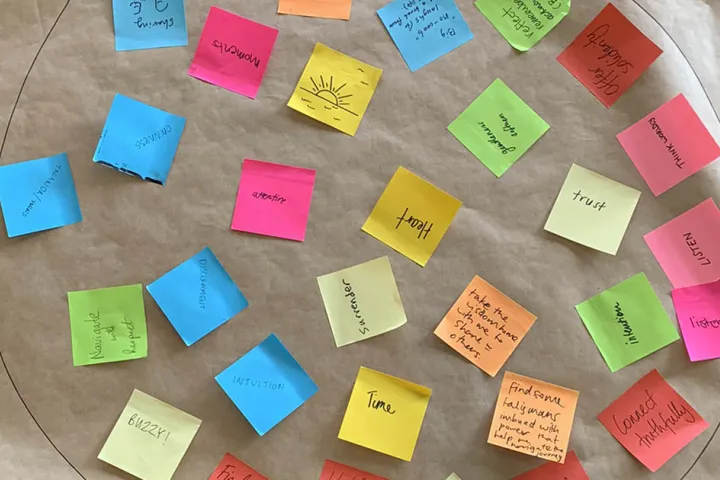
How the Australian Museums and Galleries Association (AMaGA) navigated succession planning after a generational shift in their leadership.
Develop a succession policy
Learn what to include in a policy for leadership transition and succession.
