
“The comics community in Australia feels like a vast underground network of mushroom-like interconnected people and ecologies,” says Elizabeth MacFarlane, a writer and associate professor in Creative Writing at the University of Melbourne.
It’s an image that captures how many comics creators meet, collaborate and sustain their work.
“Once you’re invited in or find a smuggler’s tunnel into this network, you see the thriving nature of this community. It’s full of drawing nights, workshop groups, studios, risograph presses run out of suburban sharehouses, zines printed secretly in uni basement libraries, indie comics festivals, giant cons, little local comic shops, public libraries, graphic novels that take 10 years to make [and] live comic readings.”
This world is now being shared through Folio: Stories of Australian Comics – a searchable online storytelling hub built over five years by a team of researchers and comic makers led by MacFarlane. Folio was produced through an Australian Research Council (AFC) funded partnership between the University of Melbourne, the University of Technology Sydney (UTS), RMIT University, The National Library of Australia and Creative Australia, with web design support from Supermarket Design and PUBLIC digital design studio.
“We wanted to build a place of encounters where anyone who has an interest in Australian comics can come to hear stories told by the people who make up this community,” MacFarlane says.
Visitors can wander through video interviews and written stories and search by themes such as genre, decade, place, publication or person – for example, ‘horror’ or ‘decade 1990s’ – and see different artists talking about those themes from varied perspectives. Highlighted in-text ‘mentions’ can be clicked to show a pop-up that explains unfamiliar terminology.
Folio is built from oral histories, but not the typical sit-down-and-talk-to-camera format. Instead, interviewees were asked to bring an object that mattered to them – a flyer, a photo, an object, a draft of a comic – that could introduce a story.
That idea of focusing on artifacts came from the home of Dr Patrick Grant, a lecturer in the School of Communication at UTS and one of Folio’s chief investigators.
“We literally went to Pat’s shed and thought, ‘If we’re going to interview these 50 artists, what would represent a life in comics?’ Pat had all of these great objects. Specific pens, drafts, favourite comics by other people, unpublished things, posters from zine fairs.” says Ronnie Scott, an associate professor at RMIT University and another Folio chief investigator.
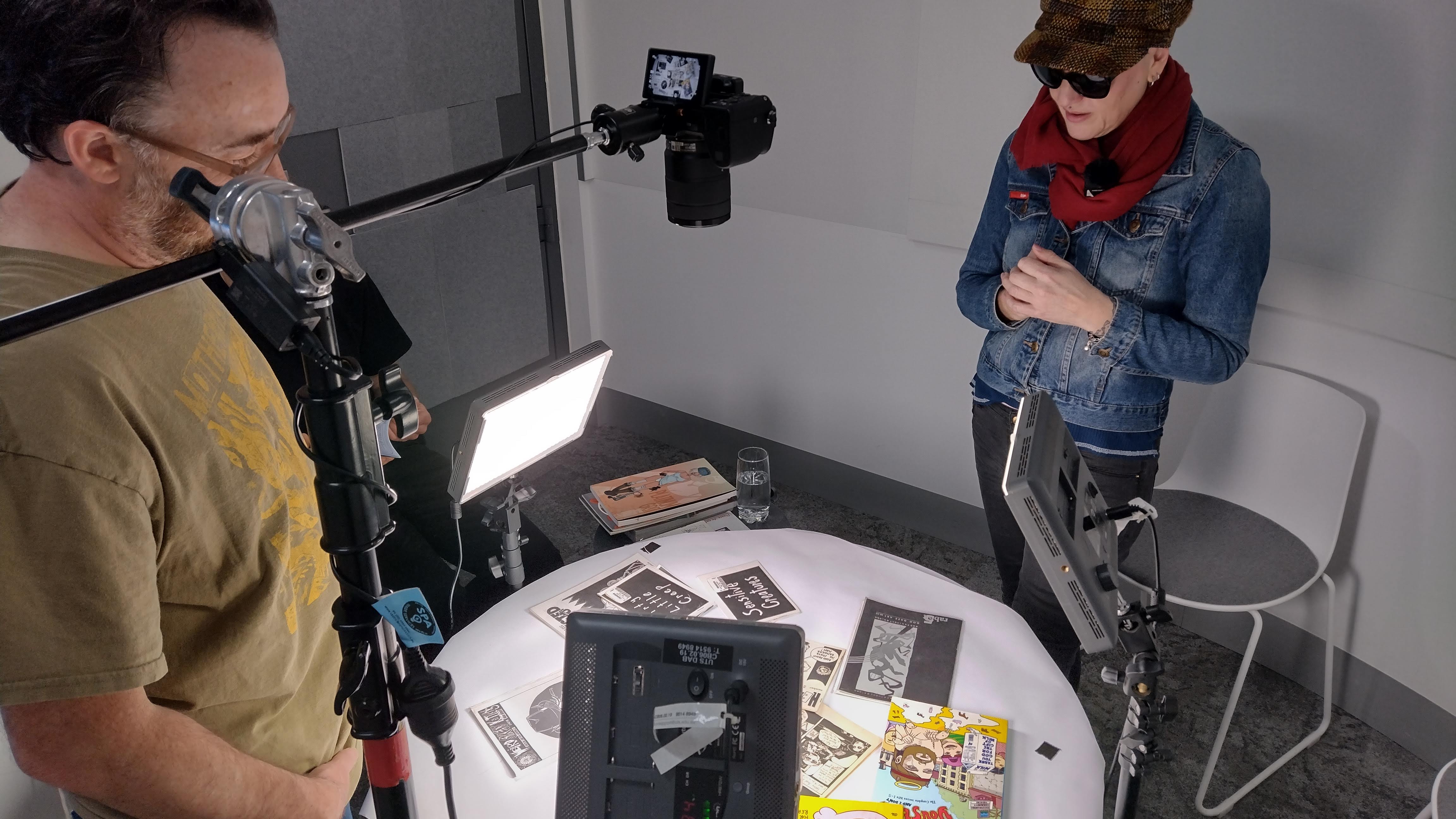
“We really weren’t too didactic about what we wanted; we just wanted something that had meaning for the interviewee,” says chief investigator Gabriel Clark, a senior lecturer in the School of Design at UTS.
“This wasn’t a talking heads interview process. This was pointing a camera down and recording the objects as we were talking over the objects … hands coming under a camera and turning pages, pointing at things or holding an object. That’s a really great way to disarm people. But it also talks to this idea of object elicitation, what objects can reveal.”
The team worked with a steering committee of comics experts to select 50 creators with ties to the 1980–2020 period, with the aim of capturing a diversity of voices while accepting that Folio couldn’t be encyclopedic.
“It’s an impossible task to pick 50 people and go, ‘this is our cross-section of this community when by rights there could be 300 or 400 of these interviews’,” Grant says.
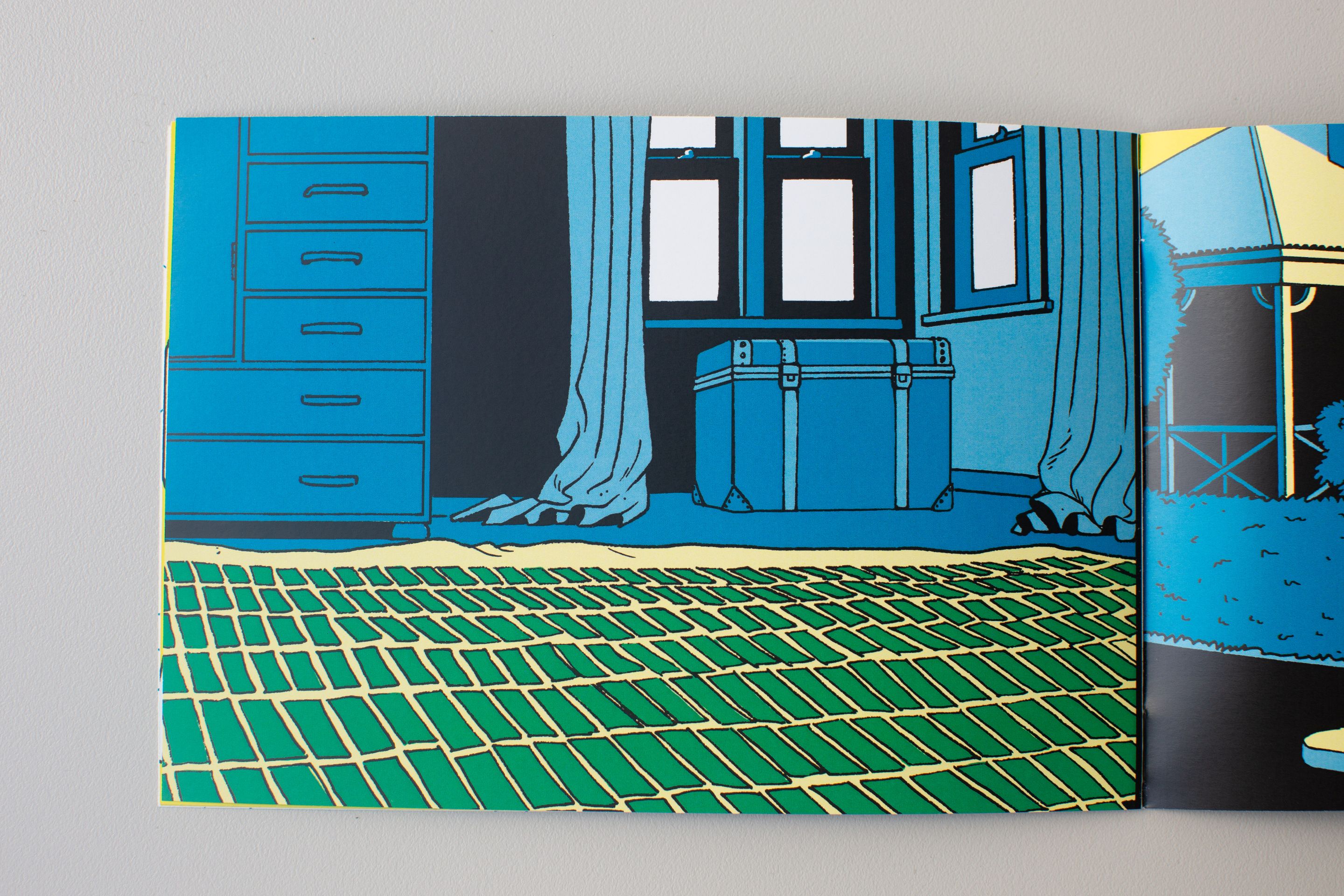
The aim, Clark adds, was “not to canonise or be a clear database of comics in Australia, but to show the range and breadth of the community.”
That range also reflects how much the comics scene has shifted between 1980 and 2020. When Scott spoke to 1980s publisher David Vodicka for the project, he described how literary circles once “totally looked down their nose” at comics.
“It shows how much the world of comics has changed and evolved, when we now see it as part of the design world and the visual art world and the literary and writing world,” Scott says.
At the same time, many creators built rich careers outside the mainstream markers of prestige.
“They have a life of making really fascinating work that they publish in zines and that they distribute themselves,” Scott says.
Interviews often ran two to four hours and required extensive editing to create smaller pieces that still sounded human and honest.
“The best interviews were actually really unruly,” Grant says. For him, that looseness of conversation is part of the appeal.
“I would rather sit and have a cup of coffee with someone who's got any kind of art practice than go to a gallery. I just love talking to artists.”
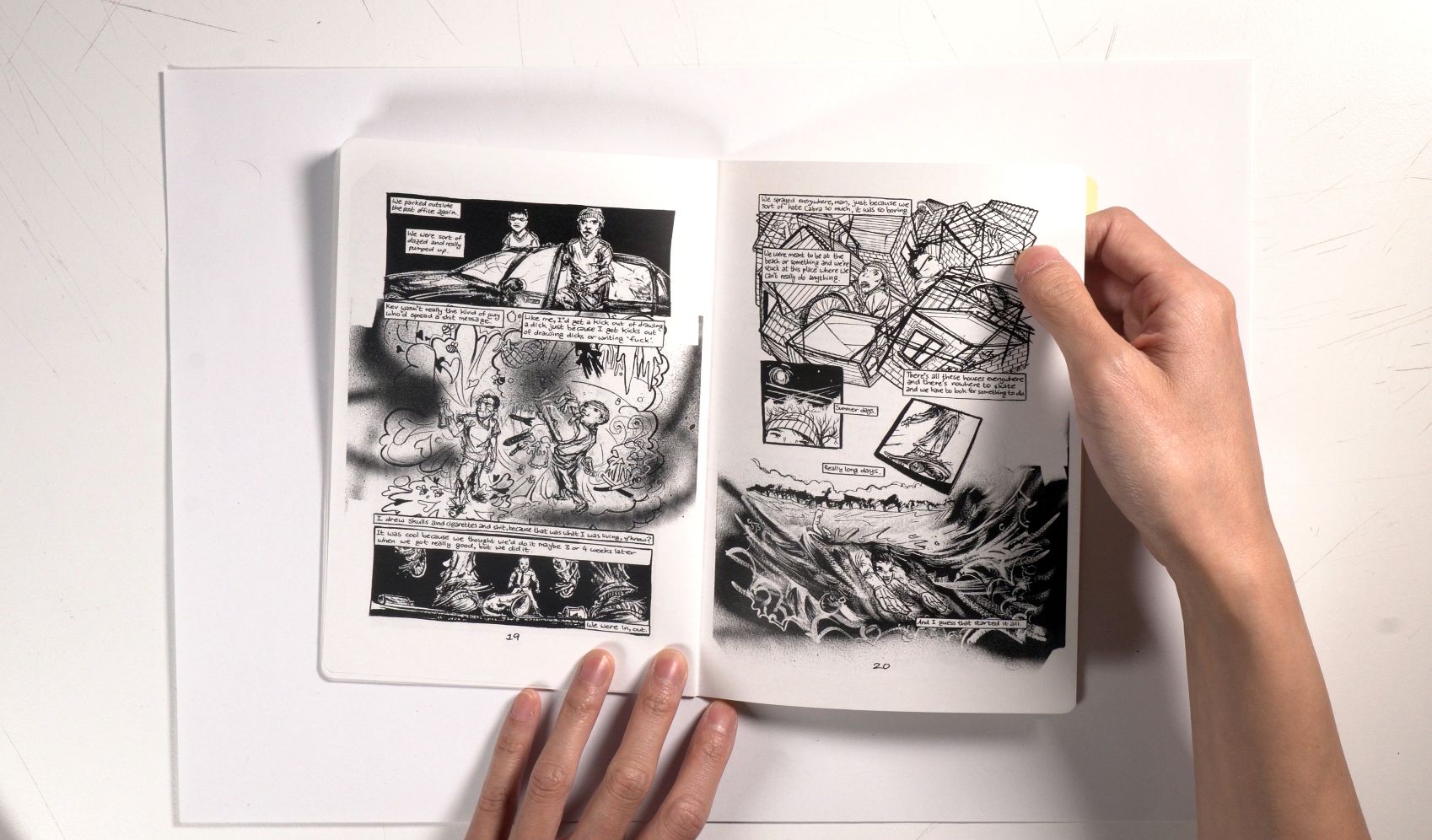
For comic maker and Folio research assistant Meg O’Shea, hearing other creators talk honestly about their setbacks and how they’ve pushed through those gaps was particularly valuable.
“Making comics is bloody hard and it can feel bloody isolating a lot of the time,” she says.
“Being able to hear how people have managed to maintain the joy, the passion, the obsession or whatever it's been that attracted them to this often underestimated but incredibly powerful medium in the first place has been so inspiring.”
Folio isn’t just about documenting the past.
“I often see call outs for poetry, short fiction, creative non-fiction, but it almost never includes comics,” Clark says. “I would hope that Folio would be something that, say, an editor of a literary journal can see that there is something that they’re not including in their literary journals.”
MacFarlane describes a tension between love and money in Australian comics. Passion keeps the scene alive, she says, but it can’t be the only thing holding it up.
“While that economy of love makes the Australian comics community completely unique and allows it to tell stories you can’t find anywhere else, our hope is also that more readers and more awareness might also build more opportunities, more consistent infrastructure, greater support, and more publishing outlets for our brilliant Australian comic artists,” MacFarlane says.
The launch of the site is a milestone, but the work doesn’t stop there. Roughly half of the collected material is now online, with the rest to be published over the coming year. The team is also commissioning new essays and considering more interviews.
“You can see something coming up in six months where we have the opportunity to think of a capsule project that’s all about Perth or Brisbane or something like that,” Scott says.
“I also love the idea of people using this website to do their own work in ways that we can’t control or predict. Making it a home for other kinds of work and other voices.”
Folio: Stories of Australian Comics is live now and free to browse. Get in touch with the Folio research team via email or visit Creative Australia’s Folio page for more information, including the webinar launch of the website.
Featured image by Claudia Chinyere Akole

We acknowledge the many Traditional Custodians of Country throughout Australia and honour their Elders past and present.
We respect their deep enduring connection to their lands, waterways, and surrounding clan groups since time immemorial. We cherish the richness of First Nations peoples’ artistic and cultural expressions. We are privileged to gather on this Country and to share knowledge, culture and art, now and with future generations.
