
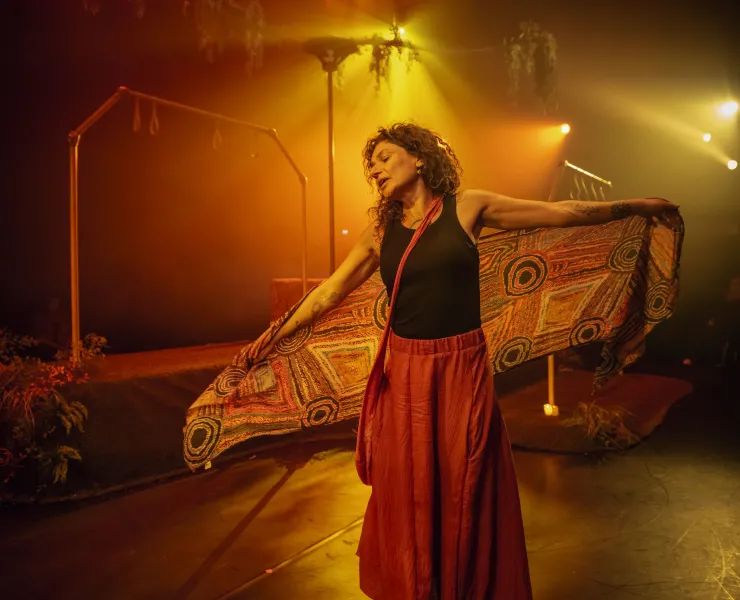
We’re sitting on a Melbourne tram, where we’d usually bump shoulders with a disparate crowd carrying countless untold stories and experiences.
Yet this tram ride is actually on a theatre stage, and we’re watching stories being shared through spoken scenes, dance, music and song. They’re stories of trauma, injustice, sadness, joy and survival that make up the new work VIGIL, which has been more than five years in the making.
Outer Urban Projects, a community-engaged performance company rooted in Naarm/Melbourne’s outer northern suburbs, stages its world premiere season of VIGIL at Arts House in North Melbourne from 22 April to 3 May 2026.
VIGIL is a collaboration of five playwrights, a choreographer, a poet and a cast of 30, including El Amal Arabic speaking women’s ensemble from Banksia Gardens Community Services.
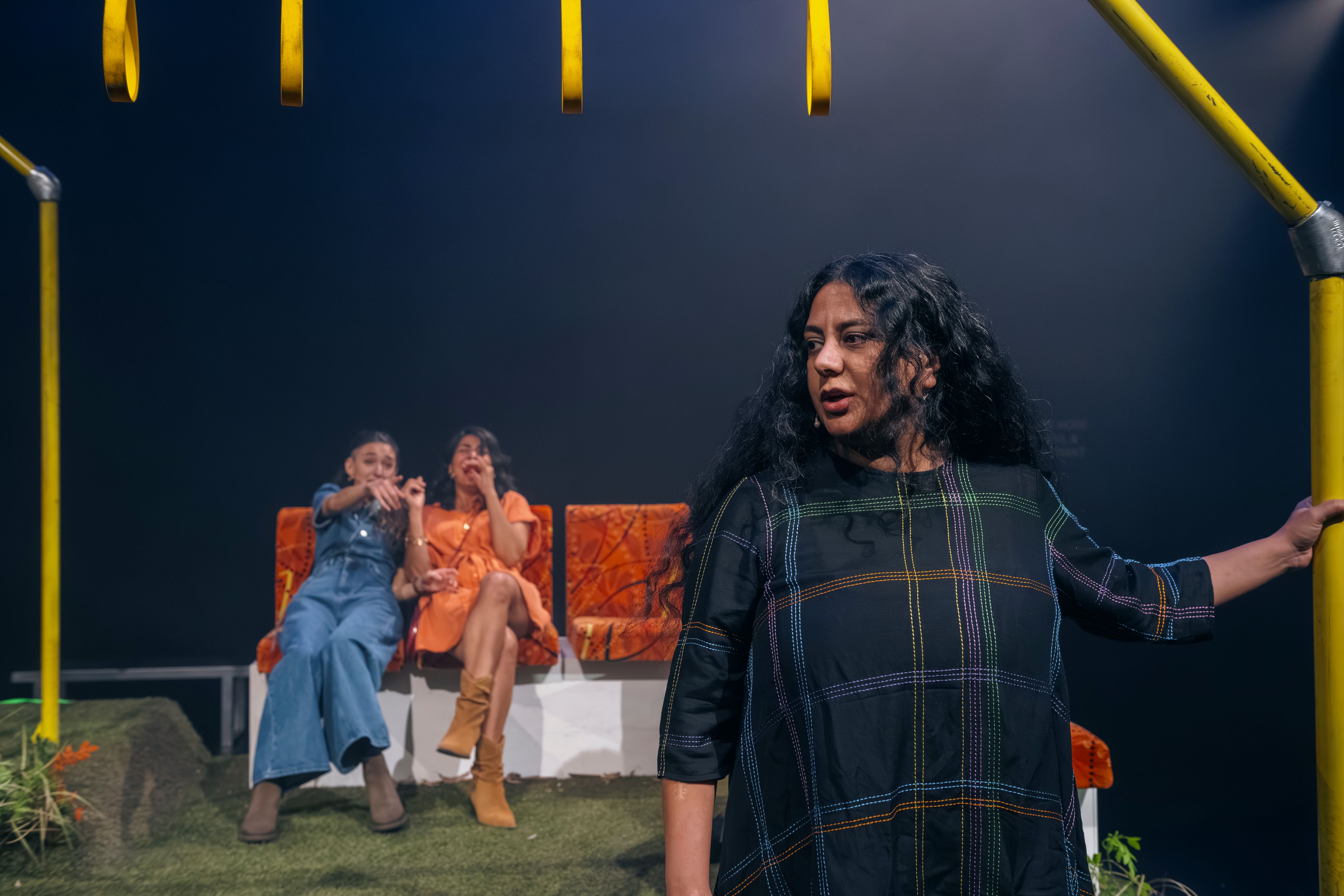
It was conceived in response to a wave of gendered violence in 2018 and 2019 in Melbourne’s north, and examines the intersections of public and private safety, race, gender and violence in our communities.
But we could also be on public transport anywhere in the world, such is the sad universality of these stories.
“We live in an incredibly violent world,” says Irine Vela, Artistic Director and Co-CEO of Outer Urban Projects. “There’s gendered violence, there’s racialised violence. There’s all forms of violence, of war, and it seems to be escalating.”
To keep vigil is to witness with others. It is, Vela says, both an act of mourning and of protest.
“All of these forms of violence are interconnected. We need to be united and to take action against that kind of violence.”
The Me Too and Black Lives Matter movements were gathering momentum at the same time, and family violence was entering wider public conversation in new ways.
“VIGIL seemed like a project that was ripe for the company and for our communities and also for the general public,” Vela says.
VIGIL began as a piece of dance theatre. The company kicked off a lengthy development phase by assembling voices including writers from Iranian-Australian, Sudanese-Australian, South Sudanese-Australian, Palestinian and First Nations backgrounds. Five playwrights came on board – Bryan Andy, Samah Sabawi, Patricia Cornelius, Kush Kuiy and Sahra Davoudi – each with different crafts, experiences and cultural references.
“We want to tell one story, but through many voices,” Vela says.
The concept of ‘development’ can seem abstract from a show you buy a ticket to see. But it’s where foundational work happens: testing ideas, building trust and figuring out what a work actually needs to be.
COVID-19 interrupted a planned Melbourne workshop when key dance artists were locked down in Berlin. Rather than stall, the company pivoted.
“We thought, ‘Well, we can’t do the development with you in Melbourne because of the lockdown, but why not make a film?’” Vela recalls.
That early creation became an award-winning short dance film screening at Arts House alongside the live performance season.
Executive Producer and Co-CEO Kate Gillick admits it’s a slog to generate the funding needed for a work of this scale that also needed time to sensitively develop the difficult stories it tells.
“It’s a really powerful concept with a very large creative team. We knew that we really did not want to strip it back. We wanted to do a work of scale and take it elsewhere,” Gillick says.
“It’s not a one or two-hander. It’s expensive. It takes the money that it takes.”
VIGIL was backed by state and local government, private donors and Creative Australia’s Creative Futures Fund, which invests in ambitious Australian work through two streams: ‘Development’ and ‘Delivery’. VIGIL was supported under the Development stream, which funds the creation and testing of new work – from research and script development to community engagement and work-in-progress showings. For VIGIL, that included a full-house sharing with community members and people connected to the stories being told.
“The strength of the concept, the strength of our reputation as a company, Irine’s work as a director, our track record on other projects, and that this [subject matter] is on the zeitgeist,” says Gillick of what made for a successful funding application.
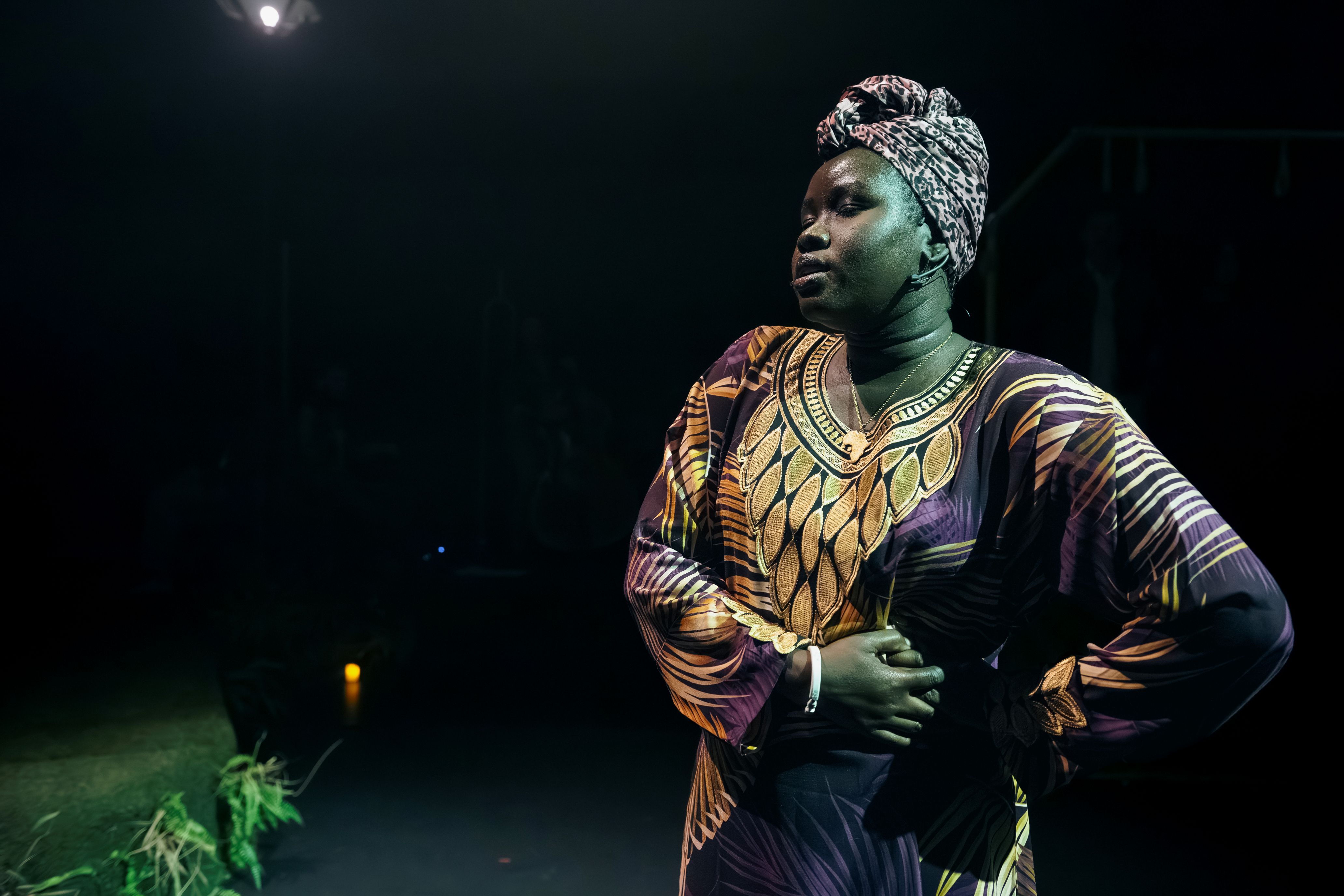
As the project grew, two emerging writers, Sahra Davoudi and Kush Kuiy, were brought into the team during further writing. Kuiy initially joined the project as a producer, but the work drew her to share her own stories.
“It was clear she wanted to write about violence in her own community,” Vela says of Kuiy, who is South Sudanese-Australian.
Poetry and eventually the integration of El Amal followed. The ensemble’s presence on stage – women who have survived war, displacement and genocide – is the result of building a relationship and trust over 18 months.
“It’s also really exciting and electrifying to bring in a community ensemble like that,” Vela says.
A challenge for a multi-authored work is how to honour its many voices while connecting them in a single piece of theatre. Each creative was given a set of provocations at the outset: news reports, media articles and victim impact statements about gendered and racialised violence, including material relating to the 2019 Christchurch terrorist attacks.
“Every writer and creative had the freedom to respond to those provocations in a way that was meaningful for them,” Vela says.
“You hold space and you have to find a way of including it to enrich the work and to enrich performance. That takes time.”
Vela also composed the haunting score that weaves a pre-recorded electro soundtrack with live musicians on stage alongside choreography by Tara Jade Samaya.
“You can express so much about this theme that goes beyond words,” Vela says.
“The universality that the music brings, the connectivity between pieces, the resonance with the dance, is just a whole other layer,” Gillick adds. “It’s not a pure anthology of all these disparate pieces.”
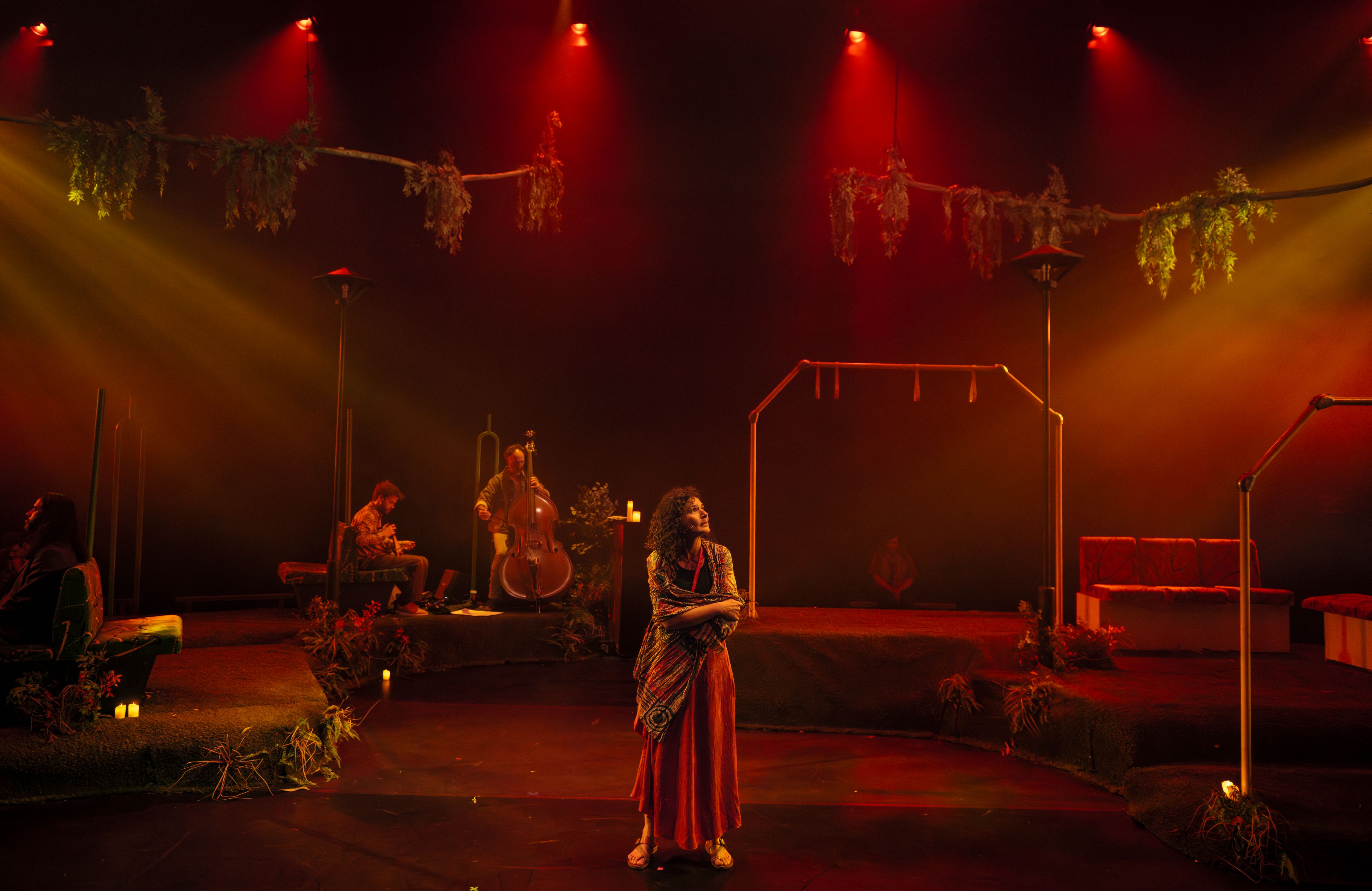
VIGIL is led by a predominantly female creative team and cast – a deliberate choice given its themes.
“That’s unusual in itself and can’t be ignored,” Gillick says. “The notion of femicides, both in family violence and public femicides, the experience of women in war is very much front and centre in the work …as well as First Nations’ experience of genocide and dispossession.”
Outer Urban Projects has also developed education resources and is running dedicated Q&A sessions for secondary and tertiary students.
For a work of this ambition, the team sees its debut at Arts House as just the beginning. The company is already pitching VIGIL to major festivals and artistic directors across the country and, given its themes and the work behind it, it feels built to travel.
“We have a strong ethos that we will take our emergent artists and our community members as artists into the Australian artistic landscape as equals. We have a really good offer,” Gillick says.
“The act of everybody combining to make a work is the most unifying thing of all,” Vela says.
“It becomes the vigil, in a way. We may be of all different backgrounds. But when it comes to banding together to mourn, to protest injustice … A theatre production of this nature actually does unify.”
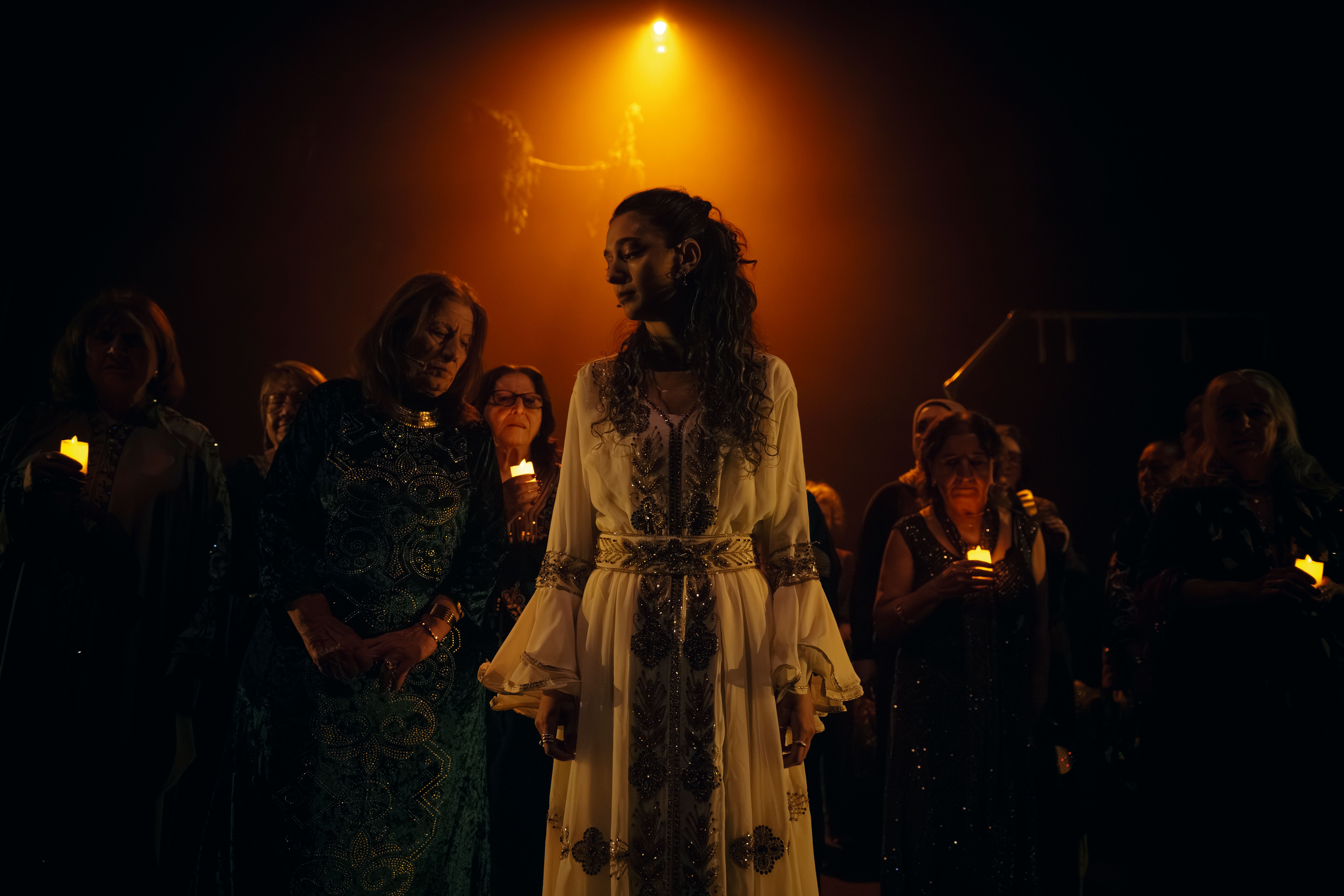
The world premiere season of VIGIL, by Outer Urban Projects, runs until 3 May 2026 at Arts House, North Melbourne Town Hall. The work is accompanied by a free film installation featuring the award-winning short dance film VIGIL. Development of VIGIL was supported through Creative Australia’s Creative Futures Fund. Find out more about other Creative Futures Fund supported projects here.
Feature image by Gregory Lorenzutti

We acknowledge the many Traditional Custodians of Country throughout Australia and honour their Elders past and present.
We respect their deep enduring connection to their lands, waterways, and surrounding clan groups since time immemorial. We cherish the richness of First Nations peoples’ artistic and cultural expressions. We are privileged to gather on this Country and to share knowledge, culture and art, now and with future generations.
