
This story forms part of a series of dialogues led by writer Rose Lu with previous recipients of the Asia Pacific Arts Awards, highlighting the artists shaping creative work across the region. You can discover other interviews on our Stories page, or via the links at the end of this article.
QAGOMA received the 2024 Asia Pacific Art Award in the “Inspire (Organisations)” category for the 10th Asia Pacific Triennial, which looked to the future of art and the world we inhabit together. How has that conception of the future changed since that triennial was held?
That triennial happened to occur in the middle of COVID-19, so it was a genuine chance to rethink what the future might look like, as it was a time where everyone was questioning what was happening around them. We’ve closed the 11th triennial since, which allowed us to reexamine that question. Artists, and particularly those in the Asia Pacific region, are very much focused on the future, and came out of that COVID-19 era with promises that the future would be bright, and different, and that we could reshape a lot of things. But we went straight into big global conflicts, and artists responded to those thinking about the necessity of cultural practice and continuing to pass on knowledge.
Do you think that the prognosis of the future is more pessimistic or optimistic?
Looking across a broad range of artist’s practices, I think it manifests in both ways. In our recent triennial there were artists that approached their practice from a place of activism, and it’s clear that they really want change. And others were perhaps a bit more witty or humorous about it, and a bit more speculative, with a creative freedom that is neither pessimistic or optimistic, but very imaginative.
Climate change is a very prevalent concern of people and artists in the Asia Pacific. So many communities in the Asia Pacific are confronted by this daily. It affects not just the islands, but also places that have experienced natural disasters, or places like the Himalayas where climate change would have catastrophic effects. Artists want to confront this and make people think about it differently. I think that’s the great power of art, the ability to move beyond newspaper headlines and academic discourse, and give people a different perspective to approach these subjects.
Some works that come to mind are NINGWASUM by Subash Thebe Limbu (APT10), which is a work about indigenous futurism located in a place in Nepal that is very vulnerable to climate change, and the fantastical drawings and paintings of Rithika Merchant (APT11), that look to a very distant future where the world as we know it is no longer inhabitable.
What do you think the current mood is around technology?
I think the interesting thing for me is watching artists taking new technologies, ones that are conjectured about with fear and opportunity, and using them in new and unexpected ways. Sometimes as a medium, but other times in a way that challenges our understanding of them.
An example is the recent work of Kawita Vatanajyankur, who is a Thai artist who studied in Melbourne. She makes performance works about the labour industry, and in her recent work The Machine Ghost in the Human Shell (APT11) she extended that idea by collaborating with an AI academic to make a performative work using muscle controls but also deep fakes of herself. It was almost like she was living in this technology to see how it could operate differently. There’s so much debate about AI today, but this added another dimension to how we could think of these technologies, not just as good or bad, but to think about how they could be used as art forms.
Often curatorial conceptions of Asian Pacific art can be tied up with historical relics, or the performance of identity or diaspora. But the work in APT comes from such a different place of engagement and has a deeply contemporary view that reflects how art is being actively developed in those countries. How was that achieved?
We do that by working in country and working with collaborators and consultants, to access contextual understanding of the how and why, and to understand the conditions which the works are being made under. Sometimes there are artistic practices that are brand new and unique to that place and artist, sometimes they draw on long histories and techniques. We try not to rely on any deeply rooted, often western centric, outside views that don’t give integrity to what carries through in a place. I hope that is visible through the exhibit. But it is just one exhibition, and it's very far from representing everything that happens in the region.
Is there a particular audience within Meanjin Brisbane that you’re trying to reach with the exhibition?
We’re committed to being a widely accessible project, in all senses. Not just the exhibition, but with how we can work and welcome our audiences in a variety of ways. We have a huge local audience, many of them repeat attendants. As a curatorial team we are always asking ourselves who the triennial is for and who we are thinking about. You can show something quite unfamiliar to someone, they may know very little about the place and culture and politics, and it sparks an interest and desire to learn and understand the culture more. Personally I enjoy reaching people who have connections to the place where the artworks have come from. Those connections can be very distant or old, or maybe it’s a place where people have family or travel often to, or have recently migrated from. To see them engage with these art works is very important.
I think showing artwork from a particular place is also a way of acknowledging its part of our community as well. The Asia Pacific is present all around us, and so we should be representing the artwork of the Asia Pacific in our cultural institutions.
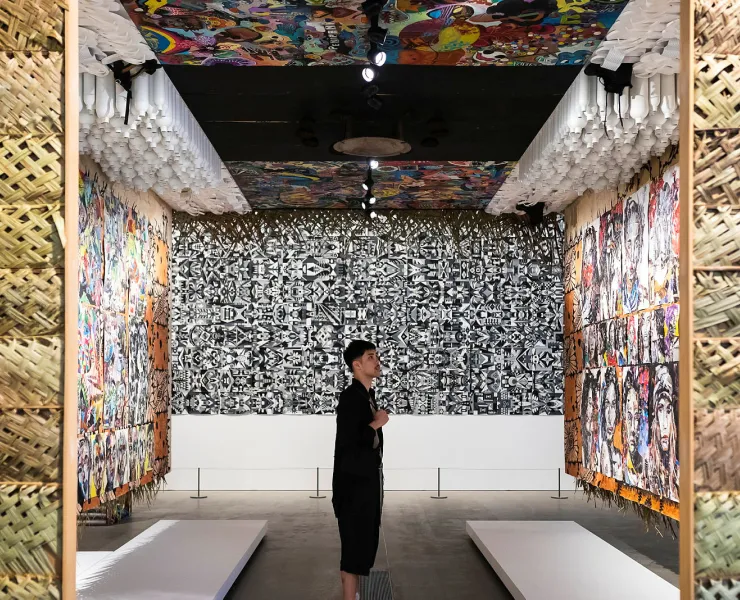
Image: Installation view of Seleka International Art Society Initiative’s Hifo ki ‘Olunga 2021, GOMA, 2021 / Commissioned for APT10. Purchased 2021 with funds from Tim Fairfax AC through the QAGOMA Foundation / Collection: QAGOMA / © The artists / Photograph: Katie Bennett
QAGOMA (Asia Pacific Triennial APT 10) were the 2024 recipient of the Inspire (Organisations) award.
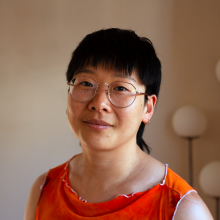
Rose Lu
WriterRose Lu is a writer from Pōneke, Aotearoa, currently based in Naarm. She gained her Masters of Creative Writing at the International Institute of Modern Letters in 2018 and was awarded the Modern Letters Prize for Creative Nonfiction. Her first essay collection All Who Live on Islands was published to critical acclaim in 2019. She has been in residence at the Randall Cottage (2022) and the Michael King Writers Centre (2024) and was a participant in the Slow Current programme run in collaboration by Liminal (AU) and Satellites (NZ) from 2022-2024. Her undergraduate degree was in Mechatronics Engineering and she has worked as a software developer since 2012.
Photo credit Gabriel Francis
More from this series
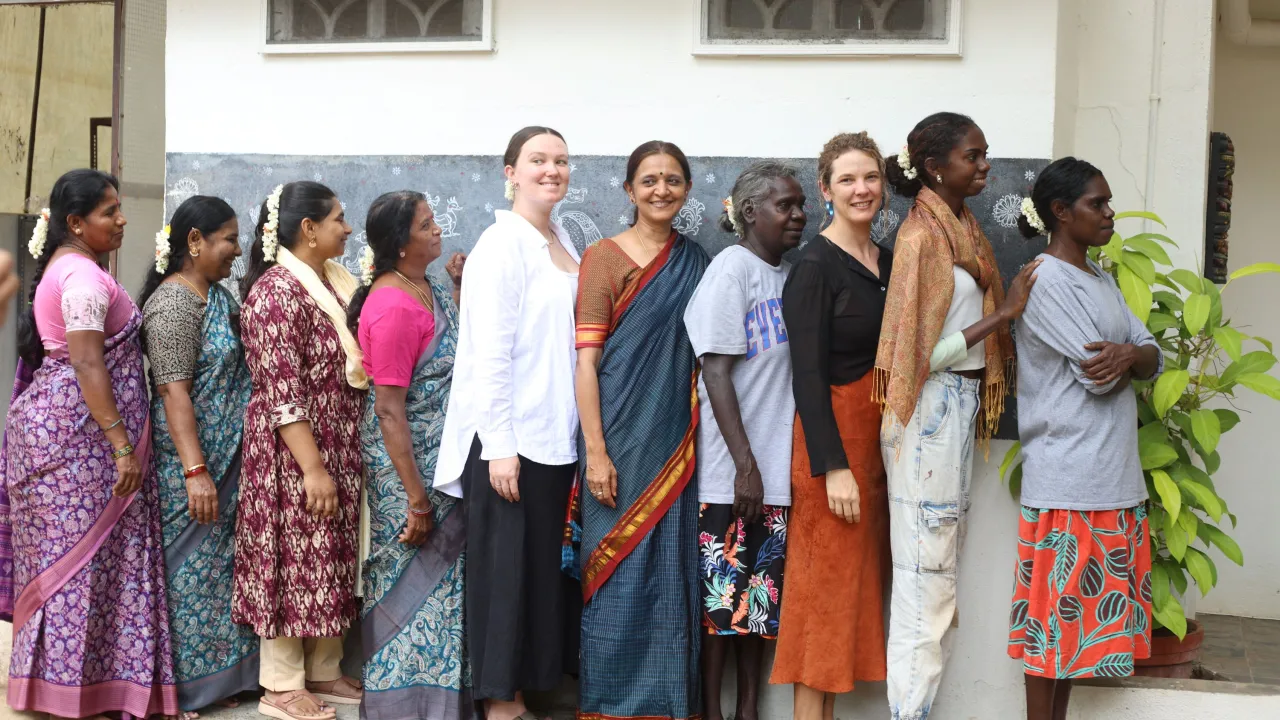
Bábbarra Women’s Centre with Tharangini Studio, 2024.
In Conversation with Bábbarra Women’s Centre
Rose Lu speaks with Jessica Stalenberg from Bábbarra Women’s Centre on why women’s textile work is neither simple nor secondary, and how a collaboration with Tharangini Studios is reshaping how these practices are valued.
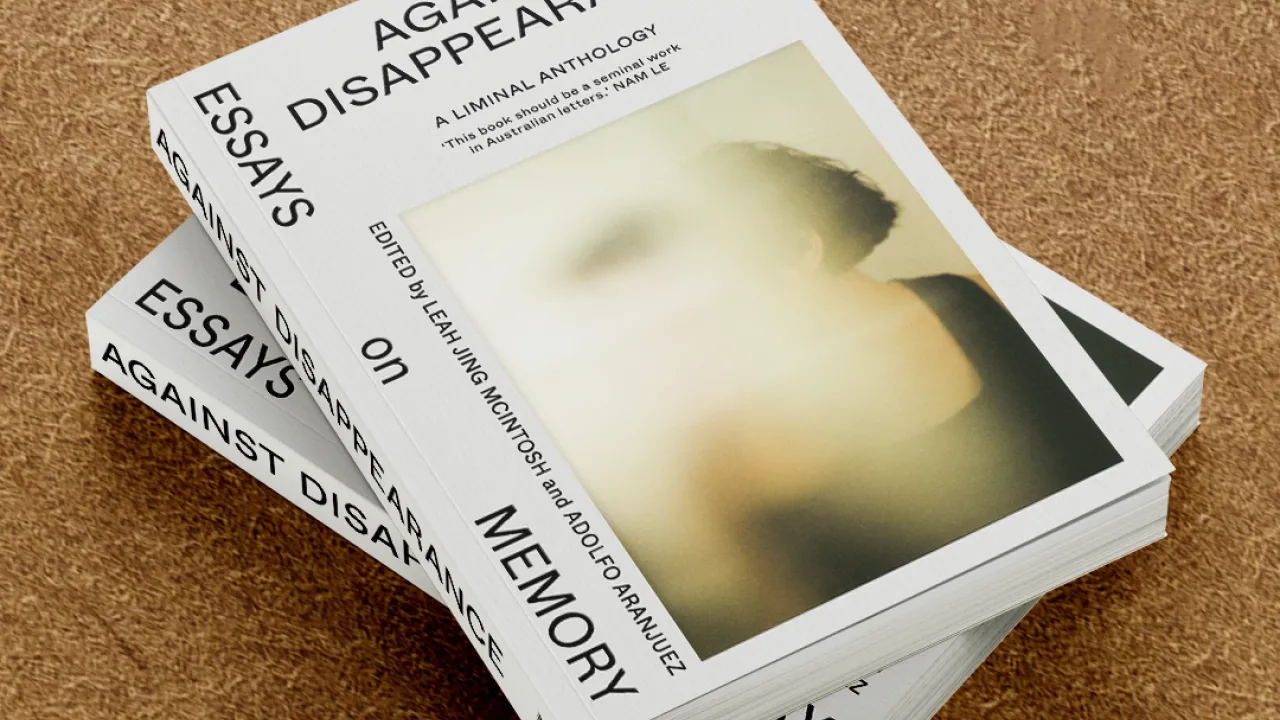
Against Disappearance, edited by Leah Jing McIntosh and Adolfo Aranjuez
In Conversation with Liminal
Rose Lu speaks with Cher Tan and Leah Jing McIntosh on porous identities, resisting narrow definitions, and fostering creativity that transcends national and cultural boundaries.

PacifiqueX, image: Gracie, Fiafia Art.
In Conversation with PacifiqueX
Rose Lu speaks with PacifiqueX president Marqy on reviving erased histories, uplifting MVPFAFF++ identities, and building joyful, resilient Pacific queer community in Naarm

Work in progress in studio, by Taloi Havini
In Conversation with Taloi Havini
Rose Lu speaks with Taloi Havini about inheritance, exile, and the long arc of Indigenous sovereignty across Oceania.

We acknowledge the many Traditional Custodians of Country throughout Australia and honour their Elders past and present.
We respect their deep enduring connection to their lands, waterways, and surrounding clan groups since time immemorial. We cherish the richness of First Nations peoples’ artistic and cultural expressions. We are privileged to gather on this Country and to share knowledge, culture and art, now and with future generations.
