
This story forms part of a series of dialogues led by writer Rose Lu with previous recipients of the Asia Pacific Arts Awards, highlighting the artists shaping creative work across the region. You can discover other interviews on our Stories page, or via the links at the end of this article.
From the writer: I spoke to Marqy, the current president of PacifiqueX about their work, and was delighted that the conversation involved code switching in the many languages in our shared history of Aotearoa and the Asia Pacific.
Can you tell me a bit about the history and kaupapa (purpose) of PacifiqueX?
PacifiqueX was founded by Tony K Fretton in 2019, with the intention of connecting Pacific Queer community in Naarm, Melbourne. It started with a group of six people trying to figure out where the need was, and to build on existing networks and find safe spaces to come together to talanoa (converse) and korero (discuss).
I took on the reins five years ago—and then COVID hit. So I navigated the challenge of establishing connections with people on an online platform. We’ve developed the core community since then, and every time there’s a new project or workshop we all come and work on it together.
What sort of projects have PacifiqueX been running?
We’ve been very fortunate as a team to be able to establish a lot of firsts. We established the first Pacific Queer radio show, PX Whanau, which aired every Saturday from 1:30pm - 2:00pm on 3CR. Having a show was important because a lot of our history was erased. The format of radio was good for our community too, as it was easy to make a recording, and it was accessible for our community members to contribute. And so radio became the platform for us to tell our stories, and because it was digital we could keep it online and keep the content available for years to come.
We were fortunate enough to be nominated for a CBAA Broadcasting award for the show, and this was huge because it feels like Queer Pacific people are always the last on the list for these types of opportunities. It was amazing for the team to get that recognition.
We also established the first Miss Faʻafāfine Victoria pageant, which was a massive hit. Normally, the girls are asked just to be hosts and to provide entertainment, to get the vibes up and create a great atmosphere for other people. But, because we had funding and support to put on the pageant, we were able to have a queer focus for the event and be more intentional about how we would run the show.
Not only were we able to engage the queer community, but our friends and family from the Pacific community as well. We had family members cheering their girls on, and giving them the love that they deserve.
It’s not often that you see that type of support from the Pacific community to their queer family members, and seeing that on the night made all the long hours that went into planning the event worth it.
What sort of performances do contestants do at Faʻafāfine pageants?
Well, there’s pretty much no limit—but when you’re around Pacific people you have to keep it P.G. [laughs] The thing about the Faʻafafine community is that they thrive on humour and shade and that’s what a lot of their performances are based on. They’ll do things like serenade a handsome man in the audience, and generally people are good sports about participating in those situations.
Can you tell me about the acronym MVPFAFF++? How do you pronounce that?
It’s ‘em-vee-pee-faff’. That term was coined by Aunty Phylesha Brown-Acton, who is an Auckland based fakafifine activist. PacifiqueX used to use the LGBTQIA+ umbrella, but we knew there were words for us from our heritage, we just didn’t know what they were. So when Aunty Phylesha introduced the term, we really took that on.
Having the term MVPFAFF++ was proof that we have always existed. Anytime we had the opportunity to speak on behalf of the community we would use this acronym, because it would reinforce that our history had always been there, but it had been erased through colonisation and religion amongst other things. Just the fact that we were able to refer to something that was ours was empowering.
Churches seem to be important gathering places for the Pacific community. How does the church hold queerness?
Yeah, a lot of Pacific Queer people are brought up going to church, and with religion. It’s part of our DNA, it’s part of our upbringing. Many of us still go to church, and how we’re received depends. Samoans are very open with the Faʻafafine community—they’ve existed for so long, they’re part of life. But you can’t necessarily say the same thing for Fakaleiti in the Tongan church. However, there are still members of the congregation who are inviting, which makes it easier to keep going to church.
What does PacifiqueX hope to do in the next 18 months?
We’re taking a break at the moment because the work at PacifiqueX is all voluntary, and over the last five years all of us main organisers have been navigating burnout. Last year I made the decision to put things on hold so everyone could find their feet, and find their love for service again.
Often people come to PacifiqueX because they want us to run their idea, when actually they are the experts who have the speciality knowledge to run the event/idea. We encourage them to come up with the plan, and then we can support them in whatever capacity we can and get them the recognition they deserve.
We also need to celebrate our win—no plans set in stone yet but Balam Balam Place have allowed us to put our award up in their Pacific space.
Who are your Pacific idols?
Mama Latoya Hoeg - backbone of PacifiqueX.
Tony, of course.
Miss Katalyna— Trans activist and DJ.
Sonja Hammer—instrumental in PX Whanau radio. She has so much knowledge to share and I'm fortunate to be one to have learnt from her.
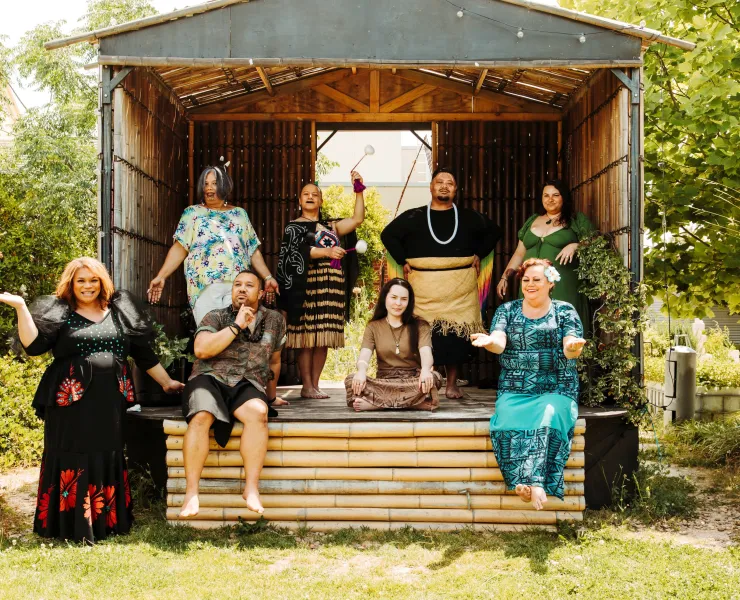
Image: PacifiqueX by Gracie, Fiafia Art.
PacifiqueX was the 2025 recipient of the Connect award.
Rose Lu
WriterRose Lu is a writer from Pōneke, Aotearoa, currently based in Naarm. She gained her Masters of Creative Writing at the International Institute of Modern Letters in 2018 and was awarded the Modern Letters Prize for Creative Nonfiction. Her first essay collection All Who Live on Islands was published to critical acclaim in 2019. She has been in residence at the Randall Cottage (2022) and the Michael King Writers Centre (2024) and was a participant in the Slow Current programme run in collaboration by Liminal (AU) and Satellites (NZ) from 2022-2024. Her undergraduate degree was in Mechatronics Engineering and she has worked as a software developer since 2012.
Photo credit Gabriel Francis
More from this series

Installation view of Seleka International Art Society Initiative’s Hifo ki ‘Olunga 2021, GOMA, 2021 / Commissioned for APT10. Purchased 2021 with funds from Tim Fairfax AC through the QAGOMA Foundation / Collection: QAGOMA / © The artists
In Conversation with Asia Pacific Triennial
Rose Lu speaks with Tarun Nagesh from Queensland Art Gallery | Gallery of Modern Art (QAGOMA) about the past and the future, and how artists can break free of these types of binary constructions.
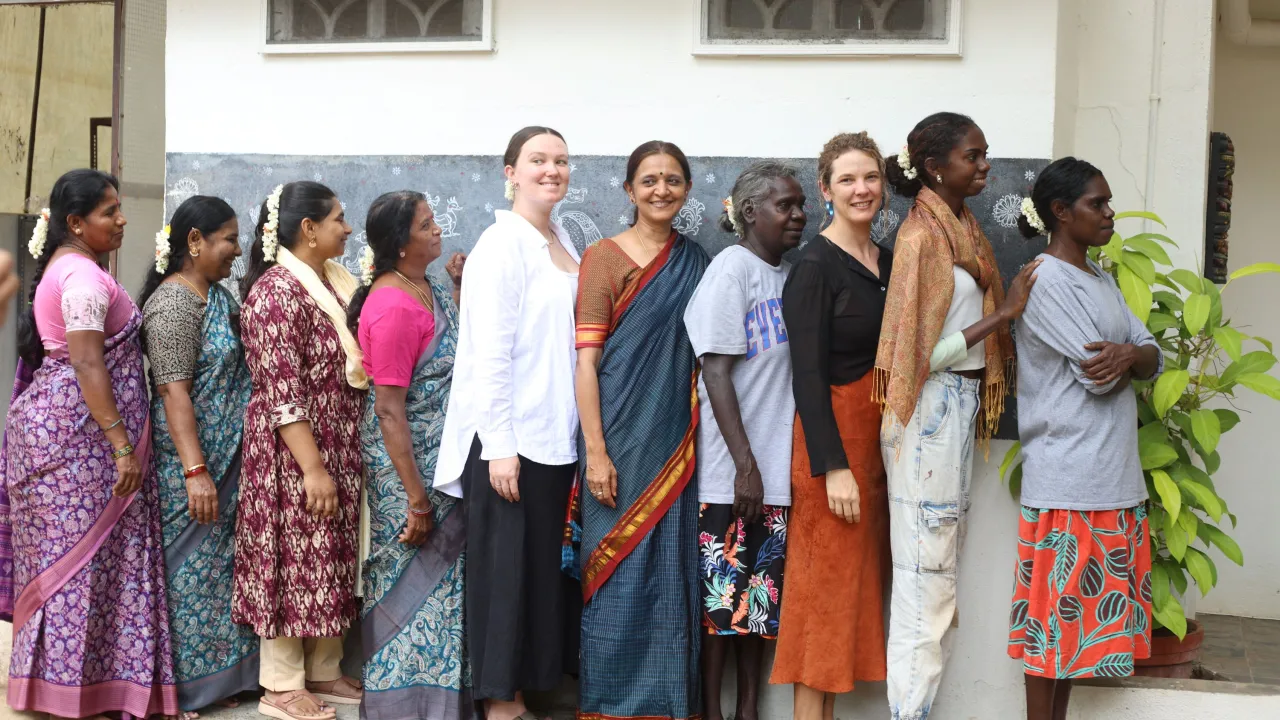
Bábbarra Women’s Centre with Tharangini Studio, 2024.
In Conversation with Bábbarra Women’s Centre
Rose Lu speaks with Jessica Stalenberg from Bábbarra Women’s Centre on why women’s textile work is neither simple nor secondary, and how a collaboration with Tharangini Studios is reshaping how these practices are valued.
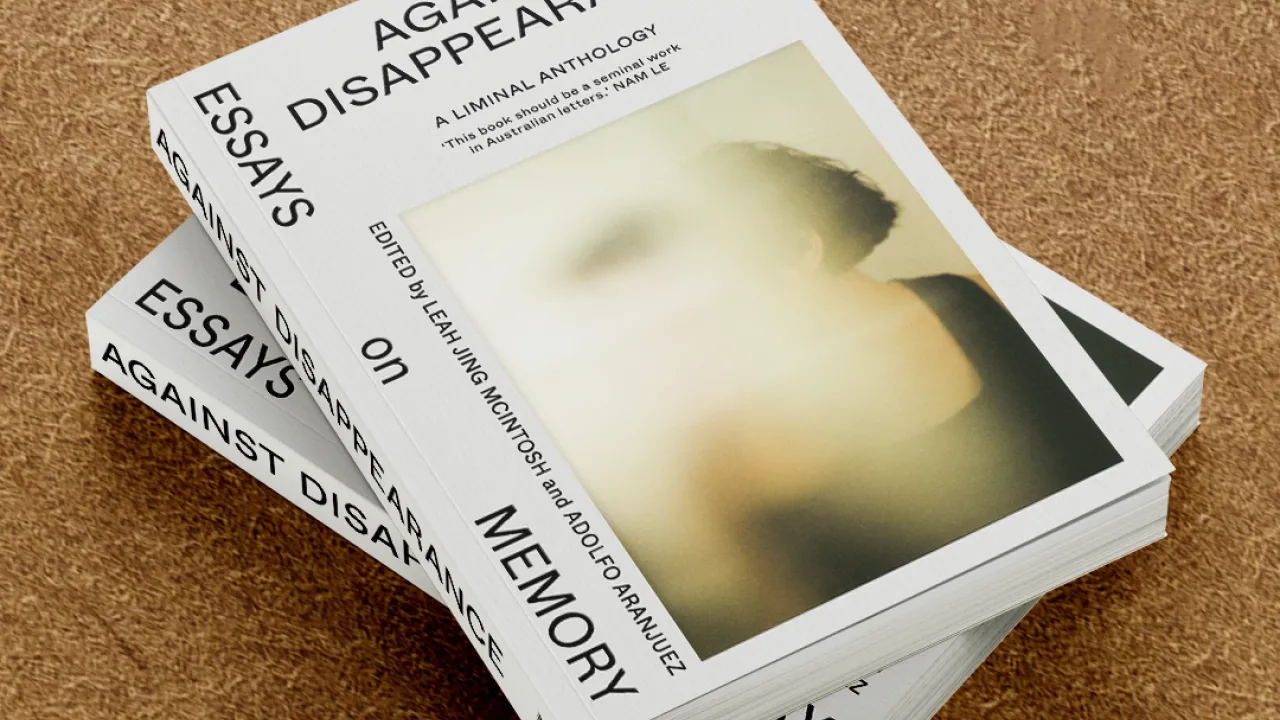
Against Disappearance, edited by Leah Jing McIntosh and Adolfo Aranjuez
In Conversation with Liminal
Rose Lu speaks with Cher Tan and Leah Jing McIntosh on porous identities, resisting narrow definitions, and fostering creativity that transcends national and cultural boundaries.

Work in progress in studio, by Taloi Havini
In Conversation with Taloi Havini
Rose Lu speaks with Taloi Havini about inheritance, exile, and the long arc of Indigenous sovereignty across Oceania.

We acknowledge the many Traditional Custodians of Country throughout Australia and honour their Elders past and present.
We respect their deep enduring connection to their lands, waterways, and surrounding clan groups since time immemorial. We cherish the richness of First Nations peoples’ artistic and cultural expressions. We are privileged to gather on this Country and to share knowledge, culture and art, now and with future generations.
