
This story forms part of a series of dialogues led by writer Rose Lu with previous recipients of the Asia Pacific Arts Awards, highlighting the artists shaping creative work across the region. You can discover other interviews on our Stories page, or via the links at the end of this article.
From the writer: I spoke to Jessica Stalenberg from Bábbarra Women’s Centre about their collaboration with Tharangini Studios. It’s a reminder that women’s work, often thought of as being easy, and non technical, is neither of these things.
What work does Bábbarra Women’s Centre do?
Bábbarra Women’s Centre is part of Maningrida Arts and Culture, which is owned by the local community, and supported by the locally run homelands organisation Bawinaga Aboriginal Corporation. What’s special about Bábbarra is that its women led—it was started in 1987 as a women’s safe house, refuge and creche, at a time where there were no other refuges.
Bábbarra became an important space for women and children, and started developing women’s economic programmes. Through the 90s and 2000s, lino printing and then screen printing were introduced to generate income for the women who were accessing the centre. At that time, women were not yet painting bark at that time, though the medium was becoming quite well known.
Bábbarra has always existed to nurture the careers of women. We’ve been able to support many artists over the years, like for example for Lucy Yarawonga, who was a print maker and lino artist for 15 years before she moved into bark, and won the 2025 Telstra NATSIAA Bark Painting award for her work Bawáliba & Ngalyod.
How did the collaboration with Tharangini Studios come about?
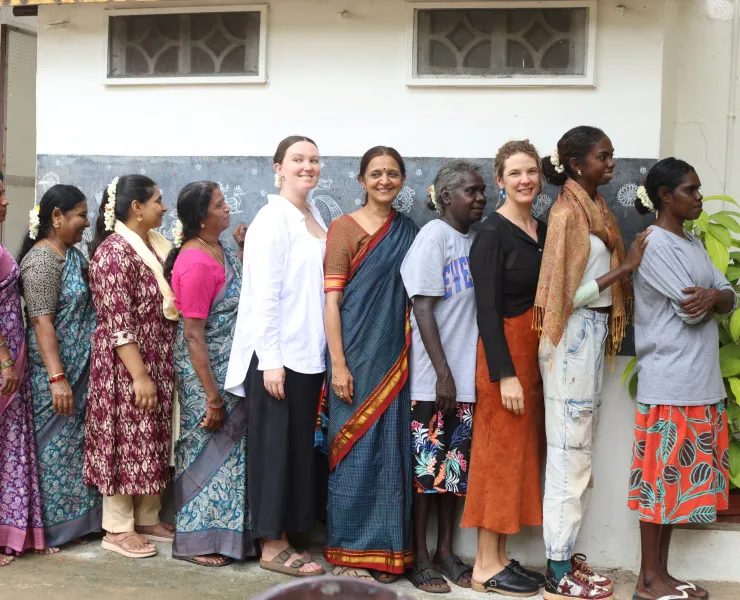
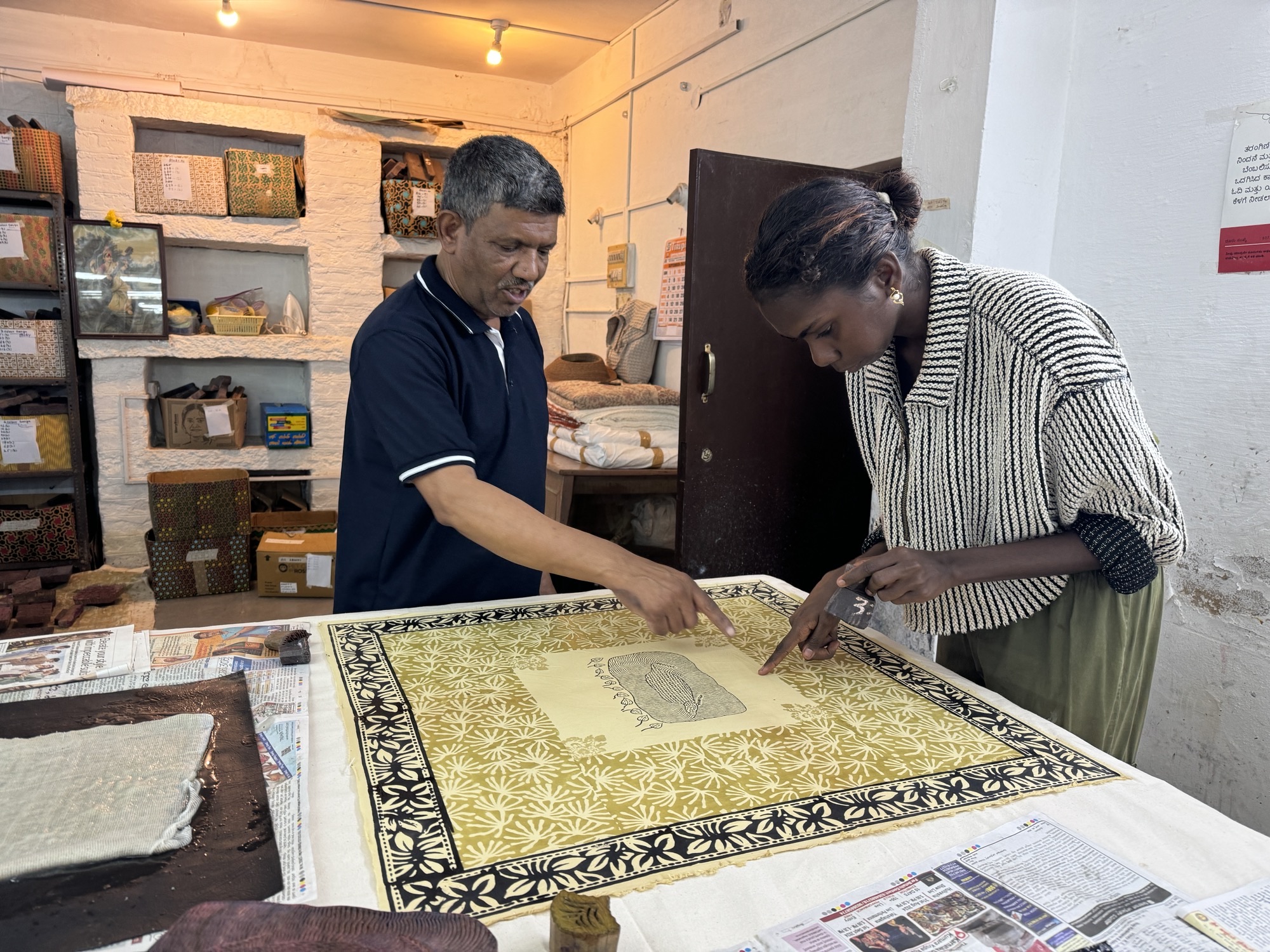
A group of us from Bábbarra were on an arts tour of India in 2023, and an opportunity came up to visit Tharangini Studios. We went for a one day workshop, and it was like finding a second home. Like Bábbarra, Tharangini is also a small, women-led space, and also aims to preserve cultural intergenerational knowledge through textile arts. Tharangini is a best practices studio for woodblock, they have a Nest fair trade seal, and employ master artisans to create the teak carvings.
Bábbarra had been doing lino printing for decades, so many of the sheets made by the founders and the founder’s parents had been crumbling and decaying due to the wet and humid conditions in Maningrida. After the initial visit, we secured some funding and that allowed us to partner with Tharangini to revive these prints into woodblock.
We were able to work in a careful way to make sure that artists were continually involved in the briefing process, as they had a profound spiritual and cultural responsibility to preserve their culture.
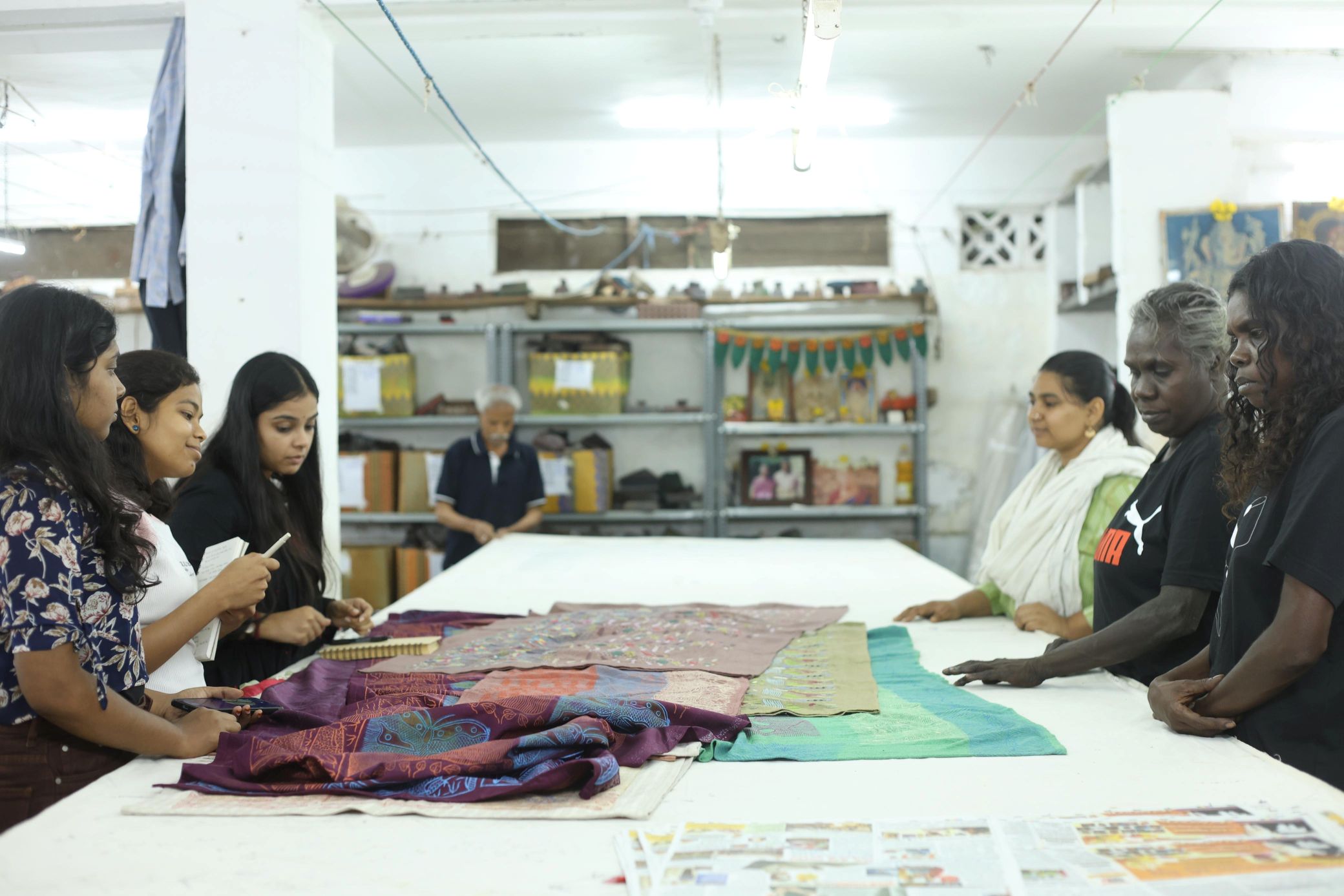
All together, 80 lino tiles were converted into woodblock, and we were able to use these to curate an exhibition in Bangalore that we then brought back to Australia. The exhibition was titled ‘Karri-djarrk-durrkmirri’, which means “we work together” in the Kuninjku language of West Arnhem Land, and was shown in Australia at Tactile Arts. The exhibition consisted of 20 textile works that told a story about a family and a set of colours that that family might have used. The textile works were first dyed, then extract printed with the woodblocks, and then some were even hand embroidered by Lambadi women artisans at Porgai Artisans Association.
What was special about the works produced at Tharangini Studios?
Tharangini are expert printers. The current manager, Padmini Govind, used to be an engineer, and came up with this way of doing extract printing that results in colours that are next level. Their process changes the colour of the dye underneath to something really electric, like a hot pink on a blue, or a hot orange. Many people have commented that they’ve never seen such vibrant colours like that before. There are ways to achieve similar results with lots of chemicals, but Tharangini Studios have found a way to do it in a more eco-friendly, natural way.
Do you think that the art world and fine artists value the medium of craft?
I think there can be a bit of negative judgement, for example, there isn’t a textiles category in the Telstra NATSIAA awards, even though we have so many amazing indigenous textile artists—the closest thing is a print category. Textiles have provenance and story and can be one off, so they are as valuable as a painting. You’re not going to see lino prints made in the same way twice. But not everyone sees it in that way. Bábbarra has had to work quite hard to prove that it can stand among the arts world, and we’ve gotten there by producing so many bespoke works and exhibitions.
We’re also careful to not be only seen as a producer of fashion. Fashion does help us build the brand and gain sales income but there is a risk that customers can quickly forget about the designers and get swept up in the glamour and the models. Fashion should have a responsibility to remember the makers, right from the weaver through to the dyer and textile artist and storyteller. On a personal note, I was a textile designer in the Australian fashion industry in Sydney for 9 years and although I developed original artwork, I was never acknowledged. My work fell under the brand. So I brought that experience to the work we did with India, making sure that we recorded all the people involved, right from the start. We wanted to acknowledge the hands of all the artisans that contributed to the work in the exhibition and later in scarves and saris that we developed to sell.
Image: Members of Bábbarra Women’s Centre and Tharangini Studios, 2024.
Bábbarra Women’s Centre, in collaboration with Tharangini Studio were the 2025 recipeint of the Innovation award.
Rose Lu
WriterRose Lu is a writer from Pōneke, Aotearoa, currently based in Naarm. She gained her Masters of Creative Writing at the International Institute of Modern Letters in 2018 and was awarded the Modern Letters Prize for Creative Nonfiction. Her first essay collection All Who Live on Islands was published to critical acclaim in 2019. She has been in residence at the Randall Cottage (2022) and the Michael King Writers Centre (2024) and was a participant in the Slow Current programme run in collaboration by Liminal (AU) and Satellites (NZ) from 2022-2024. Her undergraduate degree was in Mechatronics Engineering and she has worked as a software developer since 2012.
Photo credit Gabriel Francis
More from this series

Installation view of Seleka International Art Society Initiative’s Hifo ki ‘Olunga 2021, GOMA, 2021 / Commissioned for APT10. Purchased 2021 with funds from Tim Fairfax AC through the QAGOMA Foundation / Collection: QAGOMA / © The artists
In Conversation with Asia Pacific Triennial
Rose Lu speaks with Tarun Nagesh from Queensland Art Gallery | Gallery of Modern Art (QAGOMA) about the past and the future, and how artists can break free of these types of binary constructions.
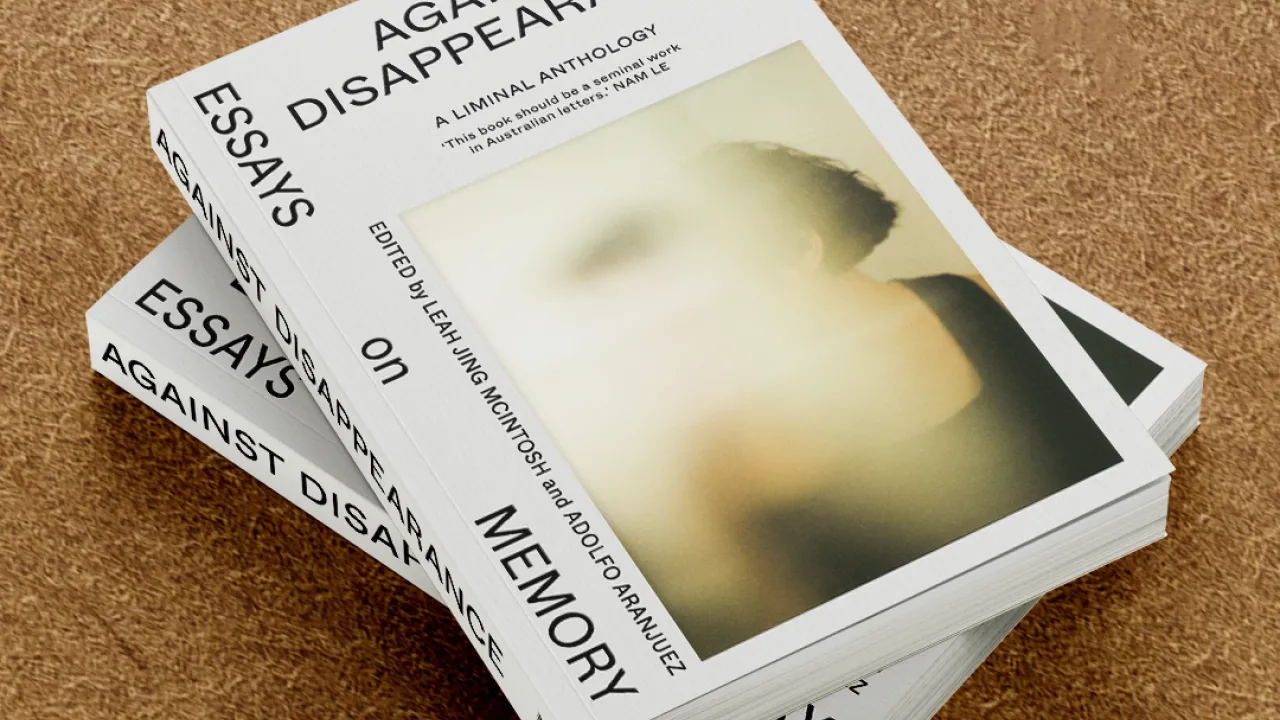
Against Disappearance, edited by Leah Jing McIntosh and Adolfo Aranjuez
In Conversation with Liminal
Rose Lu speaks with Cher Tan and Leah Jing McIntosh on porous identities, resisting narrow definitions, and fostering creativity that transcends national and cultural boundaries.

PacifiqueX, image: Gracie, Fiafia Art.
In Conversation with PacifiqueX
Rose Lu speaks with PacifiqueX president Marqy on reviving erased histories, uplifting MVPFAFF++ identities, and building joyful, resilient Pacific queer community in Naarm

Work in progress in studio, by Taloi Havini
In Conversation with Taloi Havini
Rose Lu speaks with Taloi Havini about inheritance, exile, and the long arc of Indigenous sovereignty across Oceania.

We acknowledge the many Traditional Custodians of Country throughout Australia and honour their Elders past and present.
We respect their deep enduring connection to their lands, waterways, and surrounding clan groups since time immemorial. We cherish the richness of First Nations peoples’ artistic and cultural expressions. We are privileged to gather on this Country and to share knowledge, culture and art, now and with future generations.
